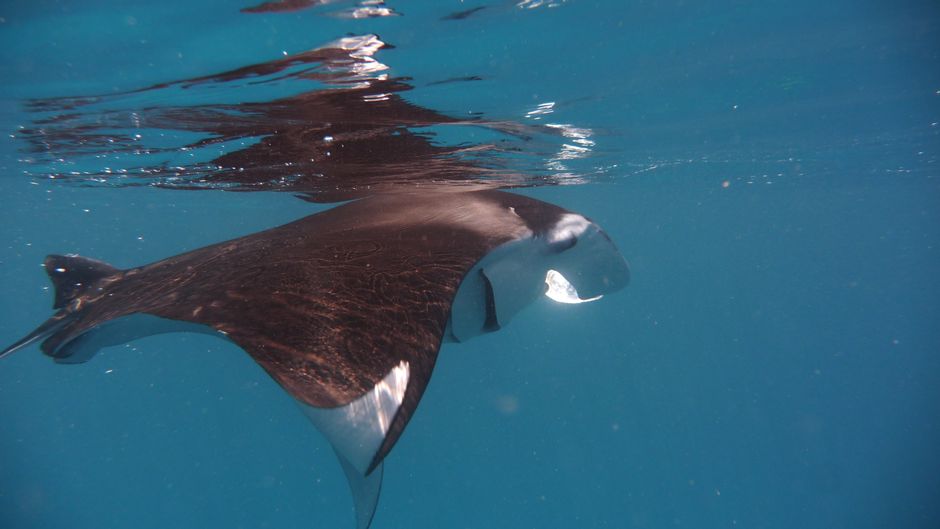
If you are researching Manta Heaven Kona Hawaii for your 2026 trip, you have likely seen the glowing reviews of the “campfire” experience and the photos of massive manta rays barrel-rolling inches from snorkelers’ faces. This is not a generic night snorkel. Manta Heaven is a specific, boat-access-only site offshore from the Kona International Airport, and it delivers one of the most reliable and intimate wildlife encounters on the planet. This guide covers everything you need to plan your trip: what makes Manta Heaven different from the other Kona sites, how to book the right tour, what to expect in the water, and the answers to the questions travelers ask most before they go.
Table of Contents
- What Is Manta Heaven? (And Why It’s Different from Manta Village)
- Where Is Manta Heaven Located? (Maps and Access)
- Manta Heaven vs. Manta Village vs. Manta Point: Which Site Is Best for You?
- How to Book the Best Manta Heaven Tour (Snorkeling vs. Scuba)
- When Is the Best Time to See Manta Rays in Kona? (Seasonal Guide)
- What to Expect on a Manta Heaven Night Snorkel (Step-by-Step)
- Safety, Environmental Impact, and Responsible Viewing (2026 Update)
- Frequently Asked Questions
- Final Tips for Your 2026 Manta Heaven Adventure
What Is Manta Heaven? (And Why It’s Different from Manta Village)
Manta Heaven is the nighttime identity of a site called Garden Eel Cove, located in Makako Bay just offshore from Keahole Point, the westernmost tip of the Big Island. During daylight hours, scuba divers visit the cove to see the garden eels that live in the sandy bottom at roughly 80 feet, along with reef fish, octopus, and the occasional passing dolphin or whale shark. When the sun sets, the site transforms completely. The garden eels retract into the sand, and the manta rays arrive.
The spectacle works through a method locals call the “campfire.” Tour operators submerge bright lights on floating surfboards or on the seafloor. Those lights attract dense clouds of zooplankton, the microscopic organisms that manta rays feed on. The mantas, some with wingspans exceeding 16 feet, glide through the plankton clouds performing slow, acrobatic barrel rolls, often passing within inches of snorkelers and divers. It is a conditioned behavior unique to the Kona coast, not a natural feeding ground the mantas stumbled upon.
Unlike Manta Village in Keauhou, which is the original and most heavily visited viewing site, Manta Heaven is only accessible by boat. There is no shore entry, no public beach, and no resort balcony overlooking the action. The rocky volcanic coastline and private land surrounding Makako Bay mean every visitor arrives on a tour vessel, which naturally limits crowd sizes. For experienced divers and travelers who want a less congested alternative to Manta Village, Manta Heaven has become the preferred choice.
Where Is Manta Heaven Located? (Maps and Access)
Manta Heaven sits in Makako Bay, directly offshore from the Kona International Airport at Keahole Point. If you look at a map of the Big Island, Keahole Point is the westernmost piece of land, and the runway lights of the airport are visible from the water during the boat ride out. The site is roughly a 15-to-20-minute boat ride from the two main departure harbors: Honokohau Harbor, just south of the airport, and Keauhou Bay, further down the coast.

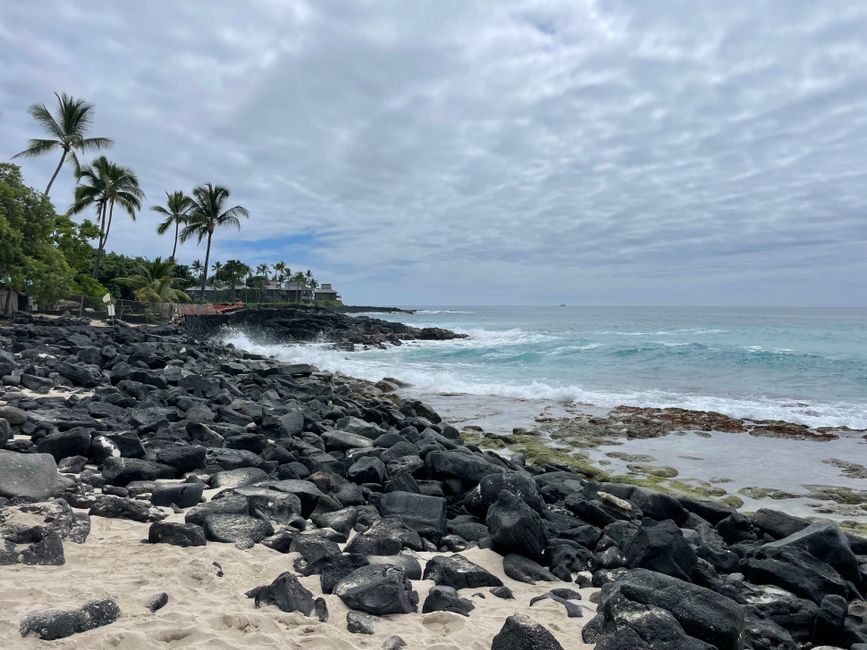
There is no public beach access to Manta Heaven. The shoreline is a mix of black lava rock and private property, and the nearshore waters see regular boat traffic. Every tour operator visiting the site launches from a marina and uses established mooring balls to secure the vessel without dropping anchor on the reef. During the day, the same coordinates are known as Garden Eel Cove, a popular reef-diving spot named for the colonies of garden eels that poke out of the sandy bottom. At night, the eels disappear and the mantas take over.
A notable landmark near the site is the Kanpachi fish farm, a nearshore aquaculture operation whose nets attract baitfish and, in turn, marine mammals like dolphins and pilot whales. It is not unusual to spot spinner dolphins during the boat ride out, adding another layer to the experience before the manta encounter even begins.
Manta Heaven vs. Manta Village vs. Manta Point: Which Site Is Best for You?
The Kona coast has exactly three established manta ray viewing sites, and they differ significantly in access, crowd levels, and the type of experience they offer. Understanding the differences will help you book the right tour for your trip.
Manta Village, located off the coast of Keauhou, is the original viewing site. It was established in the early 1970s when the Kona Surf Hotel (now the Outrigger Kona Resort and Spa) began illuminating the surf zone at night. The lights attracted plankton, the plankton attracted mantas, and a global ecotourism phenomenon was born. Today, Manta Village is the most popular and most crowded of the three sites. It is accessible by a short boat ride from Keauhou Bay, and non-swimmers can watch mantas from the resort’s viewing balcony. It is the best choice for beginners, families with young children, and anyone who wants the highest probability of seeing mantas in large numbers.
Manta Heaven, established later in 1999, is the deeper, less-crowded alternative. The water depth ranges from 40 to 50 feet where divers sit on the bottom, compared to roughly 30 feet at Manta Village. The mantas that visit Manta Heaven tend to be larger on average, and the site has recorded extraordinary peak nights: one review documented 42 individual manta rays in the water during a single outing. Because the site is boat-access-only with no resort nearby, the number of vessels and snorkelers each night is lower than at Manta Village. Manta Heaven is the best choice for certified scuba divers, experienced snorkelers, and travelers who want a more exclusive atmosphere.
Manta Point sits off Kauna’oa Bay at the Mauna Kea Beach Hotel. It is the third and least consistent of the sites. Access is limited to hotel guests who can enter the water from the private beach. Manta activity here is sporadic, and there is no guarantee of a sighting on any given night. For hotel guests who want to try their luck without booking a boat tour, it is a convenient option. For everyone else, it is not a practical choice.
Which Site Has the Best Manta Guarantee?
Most tour operators across all three sites report a sighting success rate above 70 percent, but guarantees vary by company. Kona Snorkel Trips, which runs snorkeling tours to Manta Heaven, offers a formal “Manta Guarantee”: if no mantas appear during your trip, you can return for a second attempt at no charge. This is a meaningful differentiator for travelers who have limited nights on the Big Island and want insurance against a rare no-show evening. Kona Honu Divers, the exclusive scuba operator at Manta Heaven, does not offer a free re-do, but its sighting rate is exceptionally high due to the site’s consistent plankton aggregation and the operator’s deep familiarity with manta behavior patterns at this specific location.
How to Book the Best Manta Heaven Tour (Snorkeling vs. Scuba)
The most important thing to know about booking a Manta Heaven tour is that one company holds exclusive access for scuba diving. Kona Honu Divers has been the only dive operator visiting Manta Heaven since 2017. If you want to experience the site from the seafloor, sitting on the sandy bottom while mantas swoop overhead, this is the company you book with. They have accumulated over 3,500 five-star Google reviews and run a purpose-built dive boat with hot showers, a marine head, and a crew that knows the site’s topography and manta behavior intimately.
For snorkelers, Kona Snorkel Trips is the standout choice. With over 5,000 five-star Google reviews, they run a polished operation that uses large, lighted surfboards as floating platforms. Snorkelers hold onto handles along the board’s edges, forming a circle around the light source. The mantas feed directly beneath the board, often coming within inches of the surface. The company provides full wetsuits, masks, snorkels, and fins, along with hot chocolate and snacks after the encounter. Some trips include free digital photos taken by an in-water guide.
Pricing for the 2026 season falls into a predictable range. Snorkeling tours to Manta Heaven typically cost between $120 and $180 per person, depending on the operator, group size, and whether you book during peak summer months. Scuba diving tours run higher, generally $150 to $220 per person, reflecting the smaller guide-to-guest ratios and the additional equipment and safety requirements. Early-bird pricing is available from some operators if you book 30 days or more in advance, and it is worth checking company websites directly for seasonal discounts.
What is included in a standard tour: a full wetsuit (shorty or full-length depending on the season), mask, snorkel, fins, flotation devices for snorkelers, all dive gear for scuba trips, an in-water guide, boat transport, and post-trip hot drinks and snacks. Some operators include digital photo packages; others sell them separately. Gratuity for the crew is not included and is customary at 15 to 20 percent if you are satisfied with the experience.
When Is the Best Time to See Manta Rays in Kona? (Seasonal Guide)
Manta rays are present along the Kona coast 365 days a year. There is no off-season for manta viewing, and the resident population of over 250 identified individuals does not migrate. The question is not whether mantas are around, but what conditions will make your boat ride and time in the water most comfortable.
June through October offers the best overall conditions. Water temperatures during these months range from 78 to 82 degrees Fahrenheit, the warmest of the year. The summer swell pattern keeps the Kona coast calm, with minimal wave action and gentle surface conditions. This is the ideal window for beginners, families with children, and anyone prone to seasickness. The air temperature is warm enough that the post-sunset boat ride back to the harbor feels pleasant rather than chilly.
November through March brings winter conditions to the Hawaiian Islands. While the Kona coast is famously protected from the large north swells that pound the island’s other shores, winter storms can still generate enough wave energy to make the boat ride rougher than in summer. Water temperatures dip to 74 to 77 degrees, which is still swimmable but noticeably cooler after 45 minutes in the water. Rain showers are more frequent, though they tend to pass quickly. The mantas are no less abundant during winter, and tours run every night that conditions allow.
The time of night matters for crowd levels, not manta activity. The first trip after sunset, typically departing between 6:00 PM and 7:00 PM depending on the season, is the most popular and often sells out first. The later trip, departing around 8:30 PM or 9:00 PM, usually has fewer boats at the site and a quieter atmosphere. Mantas will feed as long as the lights are on, so both time slots offer the same quality of encounter.
What to Expect on a Manta Heaven Night Snorkel (Step-by-Step)
Knowing the sequence of events removes uncertainty and helps you prepare mentally, especially if you have never snorkeled at night before.
Arrive at the harbor 30 minutes before your scheduled departure time. Check-in involves signing a liability waiver, getting fitted for a wetsuit, and collecting your mask, snorkel, and fins. The crew will give a safety briefing that covers how to enter and exit the water, how to hold onto the surfboard, and the critical rule: do not touch the mantas. Their skin is coated with a protective mucus layer that human contact can damage.
The boat ride to Manta Heaven takes 15 to 20 minutes. As you motor north along the coast, the crew will point out the Kona Airport runway lights and explain how the site was established. The ride itself is often scenic, with the sunset fading behind the volcanic coastline and the first stars appearing overhead.
Once the boat is moored, snorkelers enter the water and form a circle around a large, lighted surfboard. Each person holds onto a handle along the board’s edge, floating face-down with a snorkel. The lights are submerged and turned on, and within minutes, plankton begin to gather in the beam. Scuba divers descend separately and sit in a circle on the sandy bottom at 40 to 50 feet, looking up toward the surface.
The mantas arrive from the darkness. There is no set schedule, but typically within 10 to 20 minutes of the lights going on, the first dark shape materializes. The rays perform slow, looping barrel rolls through the plankton cloud, their white ventral markings reflecting the light. They feed directly in front of and above snorkelers, sometimes close enough that you can see the gill slits and the inside of their mouths. The encounter lasts 30 to 45 minutes, though it can feel both instantaneous and timeless.
Back on the boat, the crew serves hot chocolate, tea, and snacks. Many boats have a hot shower on the swim step, which is a welcome comfort after 45 minutes in the ocean at night. The ride back to the harbor is a quiet, reflective stretch under a sky full of stars.
Safety, Environmental Impact, and Responsible Viewing (2026 Update)
Manta ray night snorkeling has a strong safety record, but the ocean is an unpredictable environment. The most important safety practice is staying with the group and maintaining physical contact with the surfboard at all times. The board serves as both a flotation device and a reference point for the boat crew, who monitor the group from the vessel. Non-swimmers can participate safely by wearing a life jacket and holding the board; guides are in the water throughout the encounter. The primary risks are not from the mantas, which are harmless filter feeders, but from sea conditions, cold exposure, and disorientation in the dark. Listen to the briefing, wear the wetsuit, and follow your guide’s instructions.
Environmental stewardship is built into the way Manta Heaven operates. All tour boats use permanent mooring balls, eliminating the need to drop anchor on the reef. Operators follow a code of conduct that prohibits touching, chasing, or blocking the mantas’ movement. The number of boats allowed at the site on any given night is limited by informal agreement among operators, though no government-enforced permit cap currently exists. The mantas themselves are protected under Hawaii state law, which prohibits harming or harassing them.
The science behind the experience is worth understanding. The manta rays that visit Manta Heaven are not engaging in natural feeding behavior. They have been behaviorally conditioned over decades to associate artificial light with concentrated plankton. The process began in the 1970s at Manta Village and was replicated at Manta Heaven in 1999. The conditioning is so site-specific that a 2013 attempt to establish a fourth viewing site near the harbor failed completely. Operators deployed light boxes for six weeks, attracted plenty of plankton, and saw zero manta rays. The mantas had no learned association with that location, proving that the phenomenon depends on decades of consistent conditioning, not just the presence of light and food.
Frequently Asked Questions
What is the best time to see manta rays in Kona?
Manta rays are present year-round, but June through October offers the calmest seas and warmest water. Night tours depart just after sunset, and both early and late time slots offer excellent sighting chances.
Where is Manta Heaven located?
Manta Heaven is in Makako Bay, offshore from the Kona International Airport at Keahole Point on the Big Island’s westernmost coast. The site is only accessible by boat; there is no shore or beach access.
What hotels in Kona have manta rays?
The Outrigger Kona Resort and Spa in Keauhou has a viewing balcony overlooking Manta Village, where mantas can be seen from shore. The Mauna Kea Beach Hotel has Manta Point on its private beach, though sightings there are less consistent. No other hotels on the island offer guaranteed on-site manta viewing.
What is the best month to go to Kona, Hawaii?
For manta viewing specifically, any month works. For general travel, September and October deliver the best combination of warm ocean temperatures, low rainfall, reduced crowds after the summer peak, and calm sea conditions.
Is Manta Heaven safe for non-swimmers?
Yes. Non-swimmers wear a life jacket and hold onto the floating surfboard throughout the encounter. In-water guides are present at all times, and the boat crew monitors the group continuously.
Final Tips for Your 2026 Manta Heaven Adventure
Book your tour at least 30 days in advance, especially if you are traveling between June and October. Summer evening trips sell out weeks ahead, and walk-up availability is rare. Pack a towel, a dry change of clothes, and a waterproof camera. A GoPro with a red filter or red light setting works best; standard white flashlights are discouraged because they can disrupt the plankton aggregation. Wear the wetsuit the crew provides, even if the air feels warm. After 45 minutes of floating motionless in the ocean at night, your body temperature drops faster than you expect. Respect the wildlife. Do not touch the mantas, do not kick toward them, and follow every instruction your guide gives you. The experience depends on a fragile, decades-old relationship between these animals and the lights, and every visitor plays a role in keeping it intact for the years ahead.
