There is something almost otherworldly about stepping onto a beach where the shoreline is jet black instead of golden white. The visual contrast stops you in your tracks: ink-dark sand meeting turquoise water, framed by swaying green coconut palms and a bright blue sky. It feels like walking across a photograph that has been color-graded to perfection, except it is real, and it is one of the most unforgettable experiences the Hawaiian Islands have to offer. If you are searching for black sand beaches in Hawaii, Punalu‘u on the Big Island is the name that comes up first in every conversation, and for good reason. But the story of these dramatic shores goes far deeper than a single beach. This guide covers the best black sand beaches across the Big Island, the volcanic science that creates them, how to see the beloved honu, critical safety rules, photography tips, and everything you need to pack for a seamless visit in 2026.
Table of Contents
- Why Is the Sand Black? The Volcanic Science Behind the Shore
- Punalu‘u Black Sand Beach – The Crown Jewel of the Big Island
- Beyond Punalu‘u – Other Black Sand Beaches on the Big Island
- Best Times to Visit Black Sand Beaches in Hawaii (Seasonal Guide)
- Photography Tips for Black Sand Beaches
- What to Pack for a Black Sand Beach Visit
- Where to Stay and Eat Near Punalu‘u
- Frequently Asked Questions About Black Sand Beaches in Hawaii
- Final Thoughts – Is a Black Sand Beach Worth the Trip?
Why Is the Sand Black? The Volcanic Science Behind the Shore
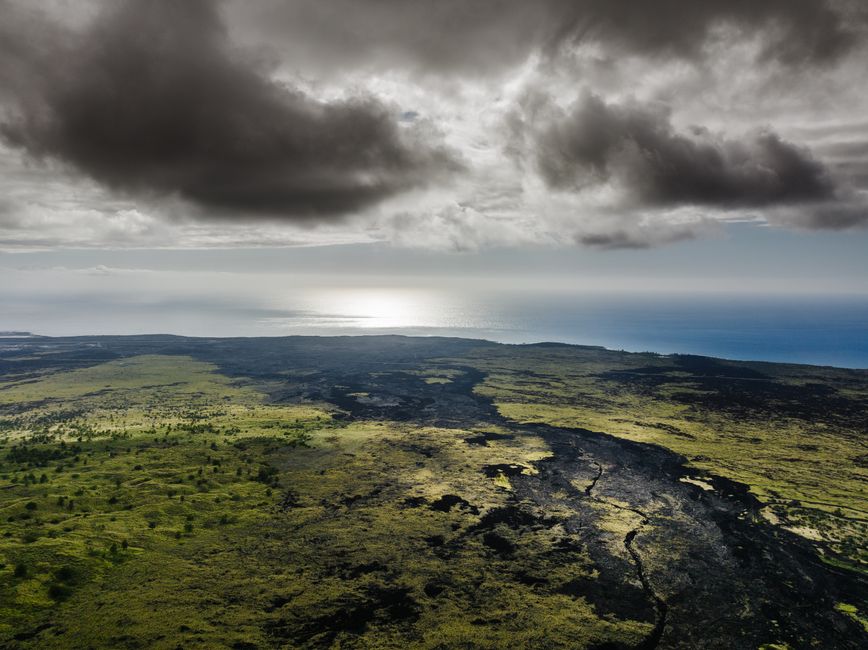
The black sand beaches in Hawaii are not the result of some ancient geological event frozen in time. They are born from violence, specifically the explosive meeting of molten lava and cold ocean water. When a lava flow reaches the sea, the extreme temperature difference causes the rock to shatter instantly. The type of lava most responsible for black sand is ‘a‘ā lava, a rough, jagged basalt that fragments into tiny, sharp grains upon contact with the water. Over time, wave action grinds these fragments down further, sorting them by size and depositing them into coves and bays as fine black sand.
This process sets black sand beaches apart from their white sand counterparts, which are typically composed of eroded coral, seashells, and the calcium carbonate excretions of parrotfish. It also distinguishes them from the rare green sand beaches, like Papakōlea on the Big Island, which owe their olive hue to the mineral olivine. One critical fact to understand is that black sand beaches are inherently temporary. If the volcanic source stops producing fresh lava, or if ocean currents shift and carry the sand away faster than it can be replenished, the beach can disappear within decades. This geological rarity makes every black sand beach in Hawaii a fleeting natural treasure, a snapshot of the island’s ongoing creation.
Punalu‘u Black Sand Beach – The Crown Jewel of the Big Island
Punalu‘u Black Sand Beach sits on the southeastern Ka‘ū coast of the Big Island, tucked between the small towns of Pāhala and Nā‘ālehu. It lies just off Highway 11, roughly 60 miles from both Hilo and Kona, which makes it an ideal mid-point stop on any cross-island road trip. The drive itself is part of the appeal, winding through macadamia nut orchards, coffee country, and vast lava fields that remind you exactly what kind of island you are on.
The beach is immediately striking. The sand is a deep, glossy black that sparkles in the sun, and it is finer than many first-time visitors expect. On a hot day, that sand absorbs an enormous amount of heat, and walking barefoot across it can become genuinely painful within seconds. Footwear is not a suggestion here; it is a necessity. The water tells a different story. Despite Hawaii’s tropical climate, the ocean at Punalu‘u is notably cold. This is due to an underwater freshwater spring that seeps up through the porous lava rock and floats on top of the denser saltwater, creating pockets of chilly water that can surprise waders.
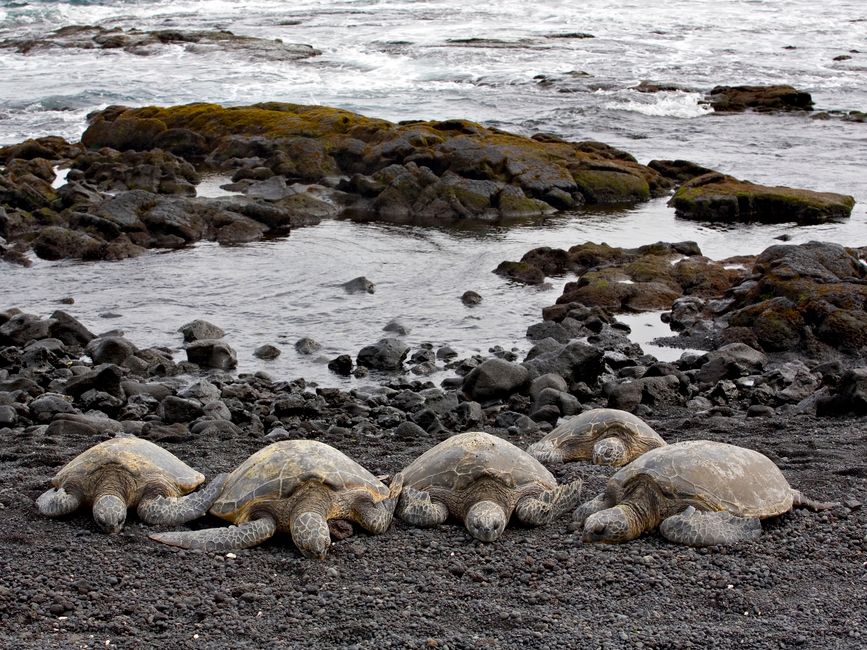
The undeniable stars of Punalu‘u are the honu, or Hawaiian green sea turtles. Locals will tell you that sightings are 99 percent guaranteed, and that claim rarely disappoints. On a typical morning, you might see half a dozen turtles gliding through the shallows, their shells catching the light just below the surface. Others haul themselves onto the warm black sand to bask, sometimes clustering together in groups of four or five. They are wild animals, not props, and their presence is a privilege that demands respect.
Beyond the sand and the turtles, Punalu‘u offers amenities that make a visit comfortable. Parking is free, with two small lots available. The north lot is the better choice for direct beach access. You will find restrooms, picnic tables shaded by palm trees, and a lifeguard station. A short walk from the beach sits Hokuloa Church, an open-air chapel built from lava rock in 1957. Its simple, weathered walls and ocean backdrop create a quietly spiritual atmosphere. Adjacent to the church is a small cemetery with graves dating back to the early 1900s, a reminder that this coastline has been a place of community and reverence long before it became a tourist destination.
Swimming and Safety at Punalu‘u – What You Need to Know
Despite its inviting appearance, Punalu‘u is not a swimming beach in the traditional sense. The cold freshwater springs make extended time in the water uncomfortable for many, and the ocean floor is rocky and uneven, with sharp lava formations hidden just beneath the surface. Entering and exiting the water can be tricky, especially for children or anyone with limited mobility.
Rip currents are a serious concern along this stretch of coastline, even on days when the surf appears calm. The Ka‘ū coast is exposed to open ocean swells, and currents can form quickly near the rocky points that frame the beach. There is no consistent lifeguard coverage despite the presence of a tower, so visitors should never assume someone is watching the water. If you choose to wade in, stay in the shallows and keep a close eye on the conditions. The black sand itself poses a hazard on sunny days. It can reach temperatures high enough to burn bare feet, so water shoes or sturdy flip-flops are essential from the moment you step out of the car.
Turtle Etiquette and Conservation Rules (2026 Update)
Hawaiian green sea turtles are protected under the Endangered Species Act and state law, and the rules around interacting with them are strict. The most important guideline is the 20-foot rule: you must maintain a distance of at least 20 feet, or roughly 6 meters, from any turtle on land or in the water. This is not a suggestion; it is a federal regulation, and enforcement is taken seriously.
Do not touch, chase, feed, or attempt to ride a turtle. Even approaching too closely can cause stress that disrupts their natural behavior, including basking, which is essential for their body temperature regulation. Flash photography is particularly harmful because it can disorient turtles and cause them to flee back into the water, expending energy they need for survival. Turn off your flash and use natural light instead.
The black sand itself is also protected. Removing sand from any Hawaiian beach is illegal, and at Punalu‘u, the rule carries both legal and cultural weight. The sand is part of the ‘āina, the land, and taking it is considered deeply disrespectful to Native Hawaiian traditions. Fines for sand removal can be significant, and airport security occasionally checks bags for black sand souvenirs. Leave only footprints, and make sure those footprints are on the beach, not in a jar.
Beyond Punalu‘u – Other Black Sand Beaches on the Big Island
Punalu‘u may be the most famous and accessible black sand beach in Hawaii, but it is far from the only one. The Big Island’s active geology has produced several other striking black sand shores, each with its own character and set of considerations. While Oahu and Maui have a few beaches with dark sand mixed in, the true, pure black sand beaches are almost exclusively found on the Big Island.
Kehena Black Sand Beach (Clothing Optional)
Kehena Beach sits on the Puna coast near the town of Pahoa, and it has a reputation that sets it apart from every other beach on this list. It is widely known as a clothing-optional beach, and the local community that frequents it embraces a free-spirited, countercultural vibe. If that aligns with your comfort level, Kehena offers a beautiful and less crowded alternative to Punalu‘u.
Access is the main challenge. The beach sits at the base of a steep cliff, and reaching it requires a short but strenuous hike down a rocky, sometimes muddy trail. It is not suitable for anyone with mobility issues, young children, or those carrying heavy gear. Once you arrive, the black sand is soft and the setting is dramatic, but the ocean here is powerful. Strong currents and rough surf make swimming dangerous, and there are no lifeguards. Kehena is best enjoyed as a place to sit, observe, and soak in the wild beauty of the Puna coastline.
Isaac Hale Beach Park (With Hot Ponds)
Isaac Hale Beach Park, located at Pohoiki in the Puna district, offers something no other black sand beach in Hawaii can claim: natural geothermal hot ponds. These pools, warmed by volcanic heat just below the surface, sit adjacent to the black sand beach and provide a surreal soaking experience. After a dip in the cold ocean, you can slide into water that feels like a bath, all while watching the waves crash against the dark shore.
The beach itself was dramatically reshaped by the 2018 Kīlauea eruption, which added new black sand to the coastline. Facilities include restrooms and a boat ramp, and the area is popular with local families. The hot ponds are the main draw, and they can get crowded on weekends. Arrive early in the day for a quieter experience, and be aware that the ocean entry here is rocky and subject to currents, much like other Puna coast beaches.
Richardson Ocean Park (Near Hilo)
For families or anyone who actually wants to get in the water, Richardson Ocean Park is the best black sand beach option on the Big Island. Located just a few miles from downtown Hilo, this small beach features a protected cove with a natural lava rock breakwater that calms the surf and creates a safe swimming area. The black sand here is mixed with larger pebbles and coral fragments, but the overall effect is still distinctly dark.
Richardson is an excellent snorkeling spot. The calm, clear water hosts honu, colorful reef fish, and the occasional octopus. Because it is so close to Hilo, it makes for an easy morning or afternoon visit without the long drive required for Punalu‘u. Facilities include restrooms, showers, and picnic tables. The park does get busy on weekends, so plan a weekday visit if your schedule allows.
Waipio Valley Black Sand Beach (Requires 4WD or Hike)
Waipio Valley is one of the most dramatic landscapes in all of Hawaii, a deep, lush gorge on the Hamakua Coast that ends in a sweeping black sand beach. The sand here is mixed with river sediment carried down from the valley’s waterfalls, giving it a slightly different texture than the purely volcanic beaches further south. The setting is epic: towering cliffs on either side, a wild river cutting across the sand, and powerful surf pounding the shore.
Access is the barrier. The road into Waipio Valley is extremely steep, unpaved, and requires a true four-wheel-drive vehicle. Rental car companies often prohibit driving it, so check your contract carefully. The alternative is hiking down on foot, which is strenuous and takes about 30 to 45 minutes each way. The beach itself is often washed out by winter swells, and swimming is dangerous due to strong rip currents and the river outflow. Waipio is for adventurous travelers who want a remote, awe-inspiring experience and are willing to earn it.
Best Times to Visit Black Sand Beaches in Hawaii (Seasonal Guide)
Timing your visit can make the difference between a magical experience and a disappointing one. The best time of day to visit any black sand beach in Hawaii is early morning, ideally before 10 AM. At this hour, the sand has not yet absorbed the full heat of the sun, the parking lots are emptier, and the light is soft and flattering for photographs. Late afternoon, especially the hour before sunset, offers golden light that creates stunning contrast against the black sand and is ideal for photographers.
Turtle activity follows its own rhythm. Honu are most likely to bask on the sand in the late morning, after the sun has had time to warm the beach. On cloudy, windy, or rainy days, they tend to stay in the water, so a bright, calm morning is your best bet for seeing them hauled out on shore. Seasonal changes also matter. Winter months, from November through March, bring larger north and west swells to the islands. While Punalu‘u faces southeast and is somewhat sheltered, other black sand beaches can see dangerous surf during this period. Summer, from May through September, generally offers calmer ocean conditions across the Big Island.
Weather is another factor. Heavy rain is common on the windward sides of the islands, and runoff after a storm can turn the ocean murky and reduce visibility for turtle spotting and snorkeling. If your schedule is flexible, wait for a clear day after a dry spell for the best conditions.
Photography Tips for Black Sand Beaches
Photographing black sand presents a unique technical challenge. Your camera’s light meter is calibrated for middle gray, and when it sees all that dark sand, it will often overexpose the image, turning the sand a washed-out gray and blowing out the sky. The fix is exposure compensation. Dial in +1 or +2 stops of exposure compensation to keep the sand looking properly dark while maintaining detail in the highlights. If you are shooting with a smartphone, tap on the sand to set exposure, then slide the brightness adjustment up slightly until the scene looks natural.
Golden hour, the period just after sunrise and just before sunset, is when black sand beaches truly shine. The low-angle light brings out the texture of the sand and casts a warm glow that contrasts beautifully with the cool tones of the ocean. For composition, use the black sand as a leading line. A sweep of dark shore drawing the eye toward a basking turtle or a cluster of palm trees creates a powerful image.
Turtle photography requires patience and the right gear. A telephoto lens in the 70-200mm range allows you to capture close-up portraits while respecting the 20-foot distance rule. Avoid the temptation to creep closer for a better shot. The best turtle photos come from sitting quietly at a distance and waiting for natural behavior to unfold, a yawn, a stretch, or a slow blink in the sun. The iconic coconut palms at Punalu‘u make for classic silhouette shots, especially when framed against a colorful sunset sky.
What to Pack for a Black Sand Beach Visit
A successful visit to a black sand beach starts with what you bring. Footwear is the single most important item. Water shoes with a sturdy sole protect your feet from the hot sand and the sharp lava rocks in the water. Flip-flops work for walking on the sand but offer less protection if you plan to wade.
Sun protection is critical. The black sand reflects heat upward, meaning you are getting sun exposure from both above and below. Bring reef-safe sunscreen, a wide-brimmed hat, and polarized sunglasses. Apply sunscreen before you arrive and reapply after swimming. There are no food vendors at Punalu‘u or most other black sand beaches, so pack water and snacks. The combination of sun, heat, and walking can dehydrate you faster than you expect.
A camera is essential, and a pair of binoculars adds a new dimension to turtle watching, letting you observe behavior up close without disturbing the animals. Bring a towel and a change of clothes, especially if you plan to swim. Black sand has a way of sticking to everything, and the cold water can leave you chilled even on a warm day. A dry bag is useful for protecting electronics from sand and salt spray.
Where to Stay and Eat Near Punalu‘u
Punalu‘u is remote, and there are no luxury resorts or large hotels directly adjacent to the beach. The best nearby accommodations are in Volcano Village, a small community just outside Hawaii Volcanoes National Park, about a 30-minute drive from the beach. Volcano Village offers a range of bed-and-breakfasts, vacation rentals, and small lodges tucked into the rainforest. Staying here puts you close to both the park and Punalu‘u, making it an efficient base for exploring the southern part of the island.
The town of Nā‘ālehu, about 10 minutes from Punalu‘u, is the southernmost town in the United States and home to two essential stops. The Punalu‘u Bake Shop is famous for its sweet bread, baked fresh daily in flavors like taro, guava, and mango. It is the perfect place to grab a snack and a coffee before or after the beach. A little further down the road, the Ka‘ū Coffee Mill offers tastings of locally grown coffee and a chance to learn about the region’s coffee farming heritage.
For most visitors, Punalu‘u works best as a mid-day stop on a larger Kona-to-Hilo road trip rather than a standalone destination. Plan to spend an hour or two at the beach, then continue on to Volcanoes National Park or the Hilo side. If you are driving from Kona, the journey takes about 90 minutes each way, so factor that into your day.
Frequently Asked Questions About Black Sand Beaches in Hawaii
Can you swim at Punalu‘u Black Sand Beach?
Swimming at Punalu‘u is not recommended for most visitors. The water is cold due to underwater freshwater springs, the ocean floor is rocky and uneven, and rip currents can form without warning. If you want a black sand beach where swimming is safer and more enjoyable, Richardson Ocean Park near Hilo is a much better choice.
Is it illegal to take black sand from Hawaii?
Yes, it is illegal to remove black sand from any beach in Hawaii. The law exists to protect the natural environment, and the act of taking sand is also considered culturally disrespectful to Native Hawaiian beliefs about the land. Fines can be substantial, and enforcement is active.
Are there black sand beaches on Oahu?
No true black sand beaches exist on Oahu. Some beaches, such as those near Waianae, have dark sand mixed with lighter grains, but they do not compare to the pure black sand found on the Big Island. If black sand is a priority for your trip, the Big Island is the only place that guarantees the real thing.
What is the best black sand beach for families?
Richardson Ocean Park near Hilo is the best option for families. Its protected cove creates calm, shallow water that is safe for children to wade and snorkel in. The park has restrooms, showers, and picnic areas, and it is easy to access without a long hike or remote drive.
Final Thoughts – Is a Black Sand Beach Worth the Trip?
A black sand beach is not just another pretty shoreline. It is a direct encounter with the volcanic forces that built the Hawaiian Islands, a place where you can watch sea turtles bask on sand that was molten rock just decades or centuries ago. The experience is raw, beautiful, and unlike anything you will find on a typical resort beach. Yes, it requires some planning. The drive is long, the sand is hot, and the water is cold. But for travelers who want to see a side of Hawaii that feels ancient and alive, the black sand beaches of the Big Island are absolutely worth the journey. Add Punalu‘u to your 2026 itinerary, pack your water shoes and your patience, and prepare for a shoreline that will stay with you long after the sand has been rinsed from your feet.
