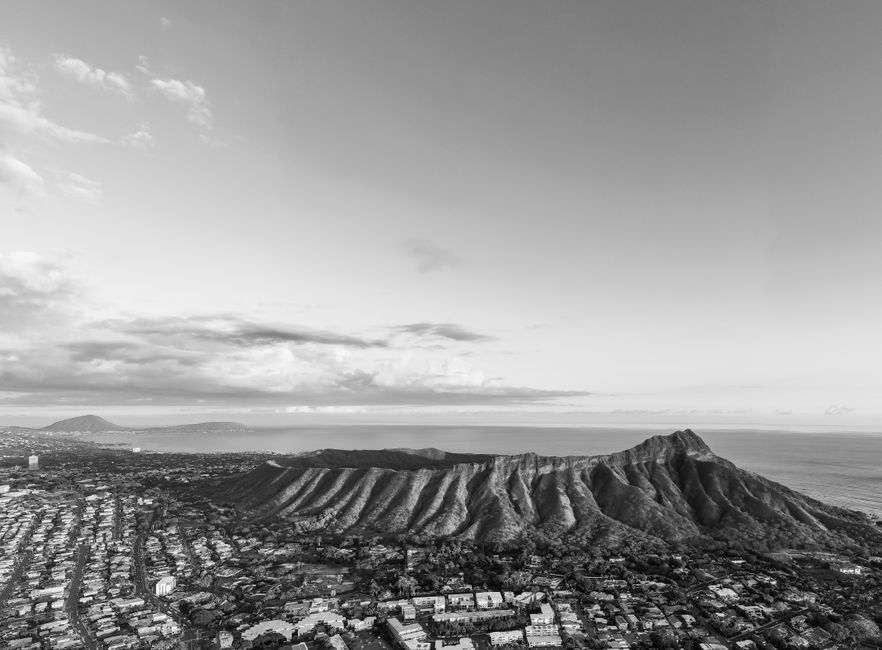
If you are looking for a brief history of Hawaii that connects the dots between ancient fishponds and modern digital sovereignty, you have come to the right place. The story of these islands is not a simple timeline of kings and battles. It is a living narrative of navigators who crossed an ocean without maps, monarchs who adopted electricity before the White House, and a people who continue to assert their identity long after their kingdom was taken. This guide covers the political, cultural, and often overlooked corners of Hawaiian history, giving you the full picture that standard tourism brochures leave out.
Table of Contents
The First Hawaiians: Polynesian Voyagers and Ancient Society
Long before European ships appeared on the horizon, the Hawaiian Islands were settled by some of the greatest navigators in human history. Polynesian voyagers crossed more than 2,000 miles of open Pacific Ocean in double-hulled canoes, guided by the stars, ocean currents, wind patterns, and the flight paths of seabirds. The exact timing of their arrival remains a subject of scholarly debate. Some sources point to settlement between 940 and 1200 AD, while others suggest the first Hawaiians arrived as early as 300 AD. What is not debated is the staggering skill required to find these tiny specks of land in the vastness of the world’s largest ocean.
These early settlers brought with them a complete world: taro, sweet potato, coconut, pigs, chickens, and a deep cultural knowledge that would shape island life for centuries. They established a sophisticated society organized around the ahupuaʻa system, a land division model that ran from the mountain peaks to the outer reefs. Each ahupuaʻa was a self-sustaining wedge of land designed to provide everything a community needed. The upland forests supplied timber and birds for feathers. The midlands grew taro in terraced patches fed by stream water. The coastal areas offered fishponds, some of them engineering marvels built with lava rock walls that allowed small fish to enter while keeping larger ones trapped for harvest. This system was not just about resource management; it was a reflection of a worldview that saw the land, the sea, and the people as interconnected and inseparable.
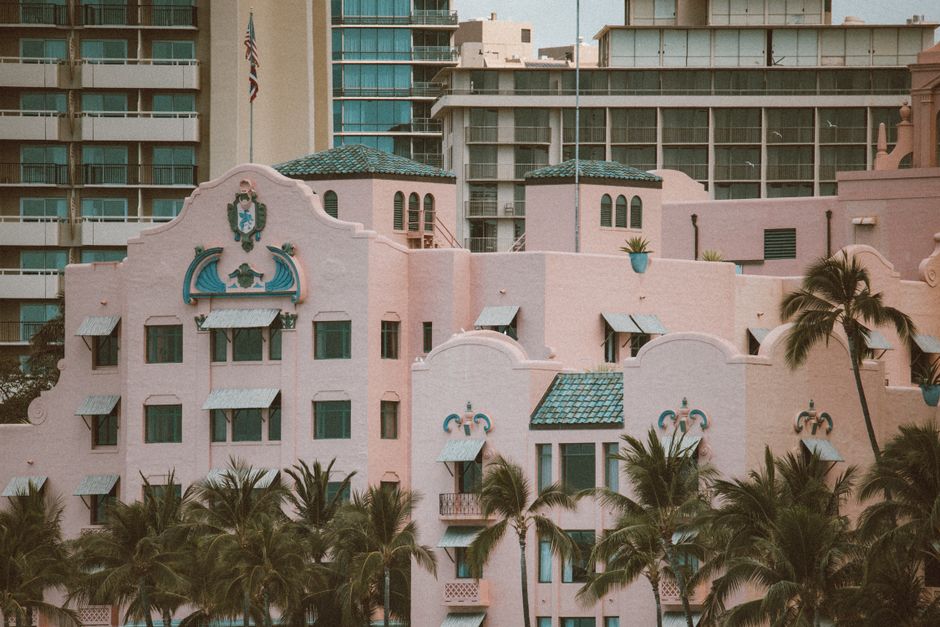
Daily life was governed by the kapu system, a strict code of laws and taboos that regulated everything from eating to fishing to gender roles. The aliʻi, or chiefly class, held authority over the land and its people, tracing their lineage directly to the gods. The kahuna were experts in specialized fields: healing, navigation, agriculture, and religious ceremony. The makaʻāinana, the common people, worked the land and sea, supporting the chiefly system through their labor and tribute. Family structure centered on the concept of ʻohana, which extended beyond the nuclear family to include a broad network of relatives bound by mutual obligation and care. Pre-contact Hawaiian culture also recognized aikāne relationships, same-sex partnerships that were an accepted and visible part of society, particularly among the aliʻi class. These relationships carried no stigma and were integrated into the social fabric alongside heterosexual marriage.
Spiritual life revolved around heiau, stone temples where ceremonies and offerings were made to a pantheon of gods that included Kāne, Kū, Lono, and Kanaloa. The oral tradition preserved history and genealogy through oli, or chants, and hula, a sacred dance form that was far more than entertainment. Hula was a living archive, encoding stories, prayers, and knowledge in movement and mele, or song. This was the world that existed in Hawaii for hundreds of years before the first European sails appeared, a complex civilization that had developed in profound isolation.
European Contact and the Unification of the Islands
Captain Cook and the “Sandwich Islands” (1778–1779)
The moment of first contact arrived on January 18, 1778, when British Captain James Cook sighted the islands of Oʻahu and Kauaʻi. He made landfall at Waimea Bay on Kauaʻi, becoming the first European to set foot on Hawaiian soil. Cook named the archipelago the “Sandwich Islands” in honor of his patron, the Earl of Sandwich, a name that would stick in Western maps and documents for decades. The initial encounter was peaceful, even welcoming. Some accounts suggest that Cook’s arrival coincided with the Makahiki season, a time of peace and celebration dedicated to the god Lono, and that the Hawaiians may have initially associated the strange ships and their commander with that deity.
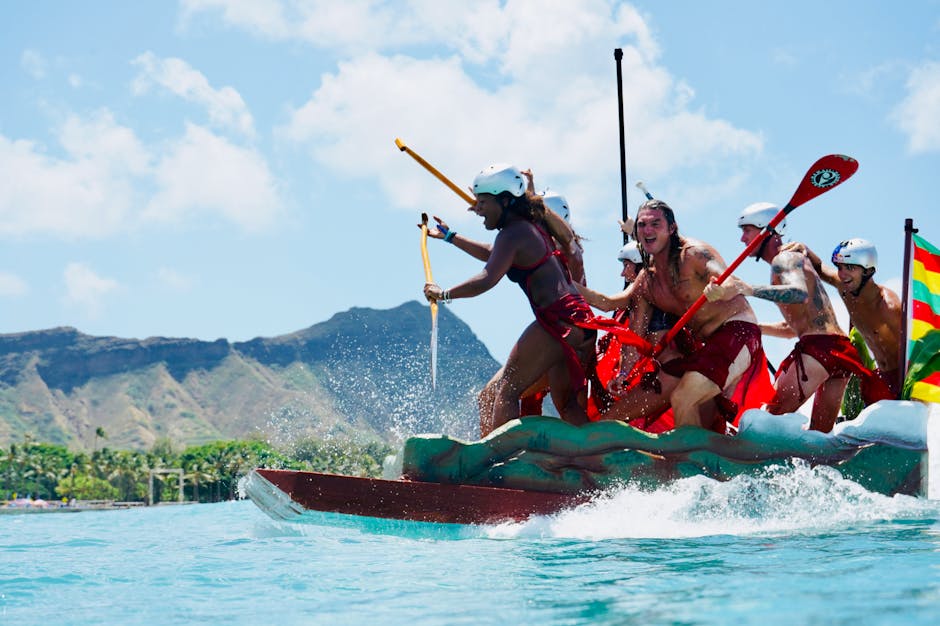
Cook returned the following year, and the relationship soured. After a series of misunderstandings and escalating tensions, a skirmish broke out at Kealakekua Bay on the Big Island on February 14, 1779. Cook and several of his men were killed. The event is often framed as a violent clash, but it was more accurately a tragic collision of two worlds that could not yet understand each other. Cook’s death marked the end of the first chapter of European contact, but it was only the beginning of profound change for the islands.
Kamehameha the Great and the Kingdom (1782–1819)
The arrival of Western ships brought more than just explorers. It brought weapons: muskets, cannons, and the tactical knowledge to use them. Kamehameha I, a chief from the Big Island, understood the transformative power of this new technology. With the help of Western advisors, including John Young and Isaac Davis, he began a campaign to unify the Hawaiian Islands under a single ruler, something that had never been done before. After years of warfare, including the decisive Battle of Nuʻuanu on Oʻahu in 1795, Kamehameha achieved his goal. By 1810, when the chief of Kauaʻi agreed to submit to his rule, Kamehameha was the undisputed sovereign of the entire archipelago, establishing the Kingdom of Hawaii.
Kamehameha’s reign brought stability and centralized governance. He maintained the kapu system while adapting to the new realities of foreign trade, particularly the lucrative sandalwood business. When he died in 1819, his son Liholiho became Kamehameha II, but real power was shared with Kamehameha’s favorite wife, Queen Kaʻahumanu, who held the influential title of kuhina nui, or regent. In a stunning move that signaled the end of an era, Kamehameha II and Kaʻahumanu publicly broke the kapu system by sharing a meal together, an act forbidden under the old religion. With the old gods cast down and the temples destroyed, Hawaiian society entered a period of spiritual and cultural vacuum, one that would soon be filled by a new arrival from New England.
The Missionary Era, Literacy, and the Sugar Boom
The first company of Protestant missionaries from the American Board of Commissioners for Foreign Missions arrived in Kailua-Kona in April 1820, just a year after the kapu system collapsed. Their timing was extraordinary. They found a society in the midst of profound religious upheaval, and they moved quickly to fill the void. The missionaries brought a printing press, and within a few years they had translated the Hawaiian language into written form, creating an alphabet of just 13 letters: five vowels and eight consonants. They established schools, taught reading and writing, and began printing books, including the Bible in Hawaiian.
The impact on literacy was nothing short of remarkable. Under the reign of Kamehameha III, who came to the throne in 1825, the literacy rate in the kingdom soared from near zero to an estimated 91 to 95 percent in just 14 years. By the mid-19th century, Hawaii had one of the highest literacy rates in the world, a stunning achievement that reshaped the intellectual and political landscape of the nation. The missionaries also brought a new moral code that clashed with traditional Hawaiian culture. Hula was suppressed, the Hawaiian language was gradually marginalized in official settings, and traditional practices were discouraged or banned. The legacy of the missionary era is deeply complex: it brought education and literacy, but it also launched a sustained assault on indigenous cultural expression.
At the same time, the economic foundations of the islands were shifting. The first successful sugar plantation opened on Kauaʻi in 1835 at Kōloa, and it set off a transformation that would redefine Hawaii. Sugar required vast amounts of land, water, and labor. The Great Māhele of 1848, a land privatization act promoted by Kamehameha III, allowed foreigners to own land for the first time. Intended to protect native land rights, the Māhele instead led to massive land loss among Native Hawaiians, who were unfamiliar with Western concepts of private property. By the end of the century, a small group of American and European businessmen, later known as the “Big Five,” controlled the sugar industry and much of the land.
The labor demands of the plantations also reshaped Hawaii’s population. Beginning in the 1850s, contract laborers were brought in from China, followed by waves of workers from Japan, Portugal, Korea, and the Philippines. These immigrants built new communities, brought their own foods, languages, and traditions, and created the multi-ethnic society that defines Hawaii today. The plantation era was one of economic growth and deep social stratification, with the Big Five wielding enormous political and economic power that would soon threaten the monarchy itself.
The Kingdom’s Golden Age and the Overthrow
King Kalākaua and the Renaissance (1874–1891)
King David Kalākaua, elected to the throne in 1874, was a visionary monarch who believed in Hawaiian independence and cultural revival. Known as the “Merrie Monarch,” he was a patron of the arts, a supporter of hula, and a champion of Hawaiian identity at a time when foreign influence was at its peak. In 1881, Kalākaua embarked on a world tour, becoming the first reigning monarch to circumnavigate the globe. He met with heads of state, studied foreign governments, and returned with a determination to modernize his kingdom.
The centerpiece of his modernization project was ʻIolani Palace, completed in 1882. It was a statement of sovereignty and sophistication, equipped with indoor plumbing, telephones, and, in 1886, electric lighting. The palace had electricity five years before the White House, and Honolulu’s early electrical grid lit the streets of the capital while much of the world still relied on gas lamps. Kalākaua also presided over a cultural renaissance that saw the revival of hula and the birth of new art forms. In 1889, Joseph Kekuku, a young musician from Lāʻie, Oʻahu, invented the steel guitar by sliding a metal bar across the strings, creating a sound that would become synonymous with Hawaiian music and influence genres around the world.
But Kalākaua’s reign was also marked by intense political pressure from the American business elite. In 1887, a group of armed businessmen forced him to sign the “Bayonet Constitution,” which stripped the monarchy of its authority, disenfranchised most Native Hawaiian voters, and handed power to a legislature controlled by wealthy foreigners. Kalākaua died in 1891, a king in name but a figurehead in practice, leaving his sister, Liliʻuokalani, to inherit a kingdom on the brink of collapse.
The Illegal Overthrow of Queen Liliʻuokalani (1893)
Queen Liliʻuokalani was a composer, a devout Christian, and a determined leader who believed the monarchy had a duty to restore the rights of her people. She drafted a new constitution that would return power to the crown and restore voting rights to Native Hawaiians. For the American sugar planters and businessmen who had grown accustomed to controlling the islands, this was an existential threat. On January 17, 1893, a group of these men, calling themselves the Committee of Safety, staged a coup. With the support of U.S. Marines who landed in Honolulu under the pretext of protecting American lives, they seized government buildings and declared the monarchy overthrown.
Liliʻuokalani, hoping to avoid bloodshed and trusting that the United States would investigate and restore her throne, yielded her authority under protest. She wrote, “I yield to the superior force of the United States of America, whose minister has caused United States troops to be landed at Honolulu and declared that he would support the provisional government.” Her trust was misplaced. The provisional government declared itself the Republic of Hawaii in 1894, with Sanford Dole as its president. In 1898, during the Spanish-American War, the United States annexed Hawaii by joint resolution of Congress, completing the transfer of power that had begun with the illegal coup five years earlier.
Territory, Pearl Harbor, and Statehood
The dawn of the 20th century found Hawaii as a U.S. territory, a status formalized by the Organic Act of 1900. The territorial era saw the continued expansion of the sugar and pineapple industries, the consolidation of power by the Big Five, and the growth of a multi-ethnic working class that would eventually organize into powerful labor unions. The U.S. military also deepened its footprint, establishing bases that would make the islands a strategic hub in the Pacific.
The geological history of Pearl Harbor stretches back 1.5 million years, when a massive earthquake and mega-tsunami split the island of Oʻahu, carving out the deep natural harbor that would later become the headquarters of the U.S. Pacific Fleet. On the morning of December 7, 1941, that harbor became the site of the most devastating attack on American soil until that time. Japanese aircraft struck the naval base in a surprise assault that killed more than 2,400 Americans and propelled the United States into World War II. The attack on Pearl Harbor is a defining moment in American history, but less often discussed is what followed on the islands themselves. Hawaii was placed under martial law immediately after the attack. Habeas corpus was suspended, and the military took control of civilian life, a condition that lasted until 1944. It was the only time in U.S. history that martial law was imposed on an entire state or territory during wartime, and it left lasting scars on the relationship between the military and local communities.
After the war, the push for statehood gained momentum. Hawaii had been a territory for nearly six decades, and its residents were American citizens subject to federal laws but without voting representation in Congress. On August 21, 1959, Hawaii became the 50th state, a moment celebrated by many as the culmination of a long struggle for full participation in American democracy. The jet age arrived almost simultaneously, shrinking the travel time from the mainland and igniting a tourism boom that would become the dominant economic force in the islands for the rest of the century.
Modern Hawaii: Sovereignty, Land, and Culture in 2026
The Sovereignty Movement
Statehood did not close the book on Hawaiian history. For many Native Hawaiians, the events of 1893 remain an open wound, and the sovereignty movement that emerged in the late 20th century has grown into a sustained and multifaceted effort to address historical injustice. In 1993, the United States Congress passed Public Law 103-150, commonly known as the Apology Resolution, which formally acknowledged the illegal overthrow of the Hawaiian monarchy and apologized to Native Hawaiians for the U.S. role in the coup. The resolution stated that the overthrow was carried out “with the active participation of agents and citizens of the United States” and that the Native Hawaiian people never directly relinquished their claims to sovereignty.
That apology became the foundation for a new phase of the sovereignty movement. In 1995, the Nation of Hawaii was officially established as a modern sovereign entity, with its own constitution and governing structure. In the decades since, the Nation of Hawaii has pursued recognition on multiple fronts. It established a central bank in 2021, launched community broadband initiatives, and has engaged with the United Nations to press its claims under international law. The concept of digital sovereignty has emerged as a particularly innovative strategy, with the Nation of Hawaii developing digital currency projects and an iGaming commission as tools for economic independence. These efforts represent a 21st-century approach to self-determination, one that uses technology and international law rather than armed resistance.
Land, Folklore, and Modern Challenges
The question of land ownership remains one of the most sensitive and complex issues in Hawaii. One frequently searched question online is, “Who owns 98% of a Hawaiian island?” The answer points to Niʻihau, the westernmost inhabited island in the chain. In 1864, Elizabeth Sinclair purchased Niʻihau from King Kamehameha V for $10,000 in gold. The island has remained in the hands of her descendants, the Robinson family, ever since. Access to Niʻihau is tightly restricted, and the island is home to a small community of Native Hawaiian residents who speak Hawaiian as their first language. Niʻihau is a living time capsule, but it is also a symbol of the complicated legacy of private land ownership in a place where land was once held in common.
Hawaiian folklore continues to shape daily life and cultural practice. Another common question from visitors is, “Why don’t you whistle at night in Hawaii?” The answer lies in the legend of the Night Marchers, or Huakaʻi pō, the spirits of ancient Hawaiian warriors who are said to march through certain areas after dark. Whistling at night is believed to attract their attention, and encountering the Night Marchers is considered extremely dangerous. The proper response, according to tradition, is to lie face down on the ground and avoid eye contact until they pass. These beliefs are not relics of a distant past; they are part of a living spiritual tradition that many residents take seriously.
Environmental challenges have become increasingly urgent in recent years. Climate change threatens coastal communities with sea level rise and intensifying storms. The Red Hill fuel leak crisis, in which a U.S. Navy fuel storage facility contaminated the drinking water supply for thousands of Oʻahu residents, highlighted ongoing tensions between military infrastructure and environmental protection. The island of Kahoʻolawe, used as a bombing range by the U.S. military for decades, remains scarred by unexploded ordnance, though restoration efforts continue. These issues are not separate from Hawaiian history; they are the latest chapters in a long story of land, power, and resilience.
5 Fast Facts About Hawaii
Fact one: Hawaii is the only U.S. state with a royal palace. ʻIolani Palace in Honolulu stands as a monument to the Hawaiian monarchy and is open to the public as a museum. Fact two: The Hawaiian alphabet has only 13 letters: five vowels and eight consonants, making it one of the shortest alphabets in the world. Fact three: The private island of Niʻihau is owned by the Robinson family and is off-limits to most visitors, preserving a traditional Hawaiian-speaking community. Fact four: The steel guitar was invented in Hawaii in 1889 by Joseph Kekuku, a musical innovation that changed the sound of country, blues, and rock music worldwide. Fact five: Hawaii has no racial majority, making it the most ethnically diverse state in the United States, a direct result of the plantation era’s global labor migration.
Frequently Asked Questions About Hawaiian History
Did Hawaiians engage in homosexuality? Yes, aikāne relationships were a recognized and accepted part of pre-contact Hawaiian culture, particularly among the aliʻi class. These same-sex partnerships were integrated into the social structure and carried no stigma in traditional Hawaiian society.
Why don’t you whistle at night in Hawaii? Whistling at night is believed to summon the Night Marchers, or Huakaʻi pō, the spirits of ancient Hawaiian warriors. According to folklore, encountering these spirits can be dangerous, and the safest response is to lie down and avoid eye contact until they pass.
What happened to the Hawaiian monarchy? The Hawaiian monarchy was illegally overthrown on January 17, 1893, when a group of American businessmen and sugar planters, backed by U.S. Marines, deposed Queen Liliʻuokalani. The United States annexed Hawaii in 1898, and it became a territory in 1900.
Is Hawaii still a kingdom? Legally, the Kingdom of Hawaii was dissolved after the overthrow and annexation. However, the Nation of Hawaii and other sovereignty organizations maintain that the kingdom continues to exist under international law and that the annexation was illegal.
Conclusion
The story of Hawaii is not a closed chapter. It stretches from the first Polynesian navigators who found these islands against all odds, through the rise and fall of a sophisticated monarchy, to a modern community grappling with questions of sovereignty, land, and cultural survival. The resilience of Hawaiian culture, from the revival of hula and the Hawaiian language to the digital sovereignty initiatives of 2026, is a testament to a people who have refused to let their identity be erased. When you visit these islands, the history is not just in museums. It is in the fishponds, the palace, the music, and the land itself. This brief history of Hawaii is just the beginning of a much deeper story waiting to be discovered.
