If you are planning a trip to the Big Island, Kona coffee farm tours are one of those rare experiences that deliver exactly what the postcards promise: fragrant mountain air, rows of glossy green trees heavy with cherry, and a story in every cup. This guide is built for travelers who want to cut through the marketing and find the tour that actually fits their schedule, their budget, and their level of coffee obsession. We live here, we have taken these tours ourselves, and we know which ones are worth the drive up the mountain.
Table of Contents
- Why Kona Coffee Tours Are a Must-Do on the Big Island
- Understanding the Kona Coffee Landscape
- The Top Kona Coffee Farm Tours Compared
- How to Choose the Right Tour for You
- Seasonal Considerations and Pro Tips
- Your Kona Coffee Tour Questions, Answered
- Plan Your Perfect Kona Coffee Adventure
Why Kona Coffee Tours Are a Must-Do on the Big Island
Kona coffee regularly ranks among the most expensive and sought-after coffees in the world, right up there with Jamaican Blue Mountain and Panamanian Geisha. But reading about it on a bag label tells you almost nothing. Walking through an orchard while the farmer explains why this particular slope gets exactly the right mix of morning sun and afternoon cloud cover, that is when the price tag starts to make sense.
The question people type into search engines is blunt: "Is the Kona coffee plantation tour worth it?" The answer is yes, with a caveat. If you are expecting a theme park attraction with polished exhibits and air-conditioned trams, you will be disappointed. These are working farms, often family-run, with gravel paths and the occasional rooster wandering through the tasting area. That is precisely the appeal. A good Kona coffee tour is a window into a way of life that has shaped this region for over a century, an agricultural tradition that survives despite relentless development pressure and a global coffee market that does not care about the cost of labor on a Hawaiian mountainside.
There is another reason to visit the source. Walk into any grocery store or souvenir shop in Hawaii and you will see bags of coffee with the word "Kona" splashed across the front in big letters. Many of them contain almost no Kona coffee at all. We will break down exactly what those labels mean later in this guide, but the short version is this: the only way to guarantee you are drinking the real thing is to buy it from the people who grew it. A farm tour gives you that direct connection, and it also gives you a morning or afternoon that feels genuinely rooted in place, something increasingly rare in resort-heavy destinations.
This guide covers the top farms, explains the difference between free and paid experiences, answers the most common logistical questions, and points you toward the unique details that make each tour different: 120-year-old trees, goat petting, hands-on raking, and one very special 1947 peanut roaster.
Understanding the Kona Coffee Landscape
What Makes Kona Coffee So Special (and Expensive)
The Kona Coffee Belt is a narrow band of land stretching roughly 30 miles along the western slopes of Hualalai and Mauna Loa volcanoes, between about 800 and 2,500 feet in elevation. That elevation range is not arbitrary. Below 800 feet, it is too hot and dry. Above 2,500 feet, it is too cool and wet. Inside the belt, the conditions are a coffee grower's dream: volcanic soil that drains beautifully, reliable morning sunshine that gives way to afternoon cloud cover and light rain, and temperatures that rarely dip below 60 degrees or climb above 80.
This microclimate exists almost nowhere else on earth, and it produces a bean with a distinctive profile: smooth, low-acid, with notes of chocolate, nuts, and sometimes a hint of tropical fruit. But the climate is only half the story. The other half is labor.
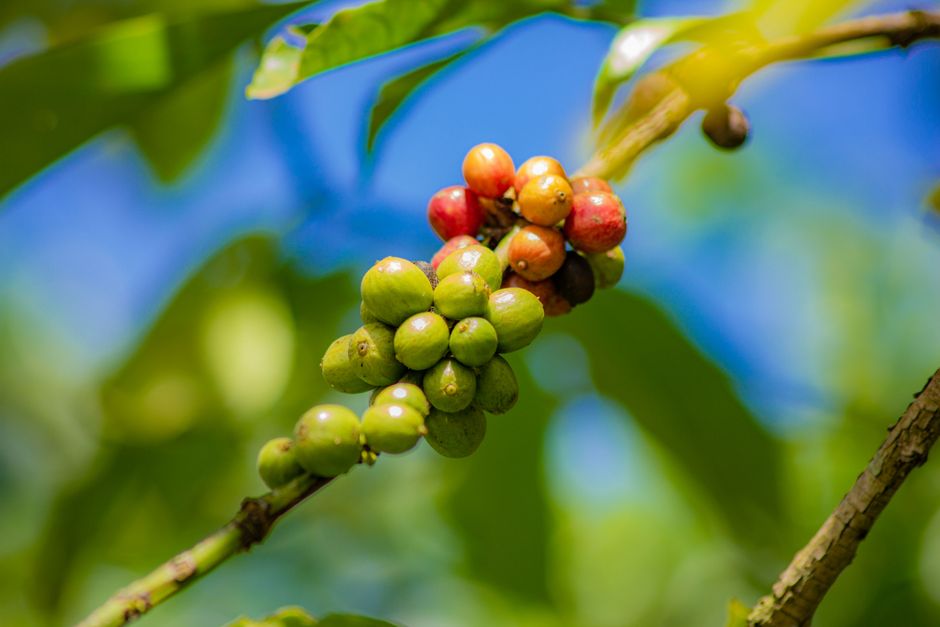
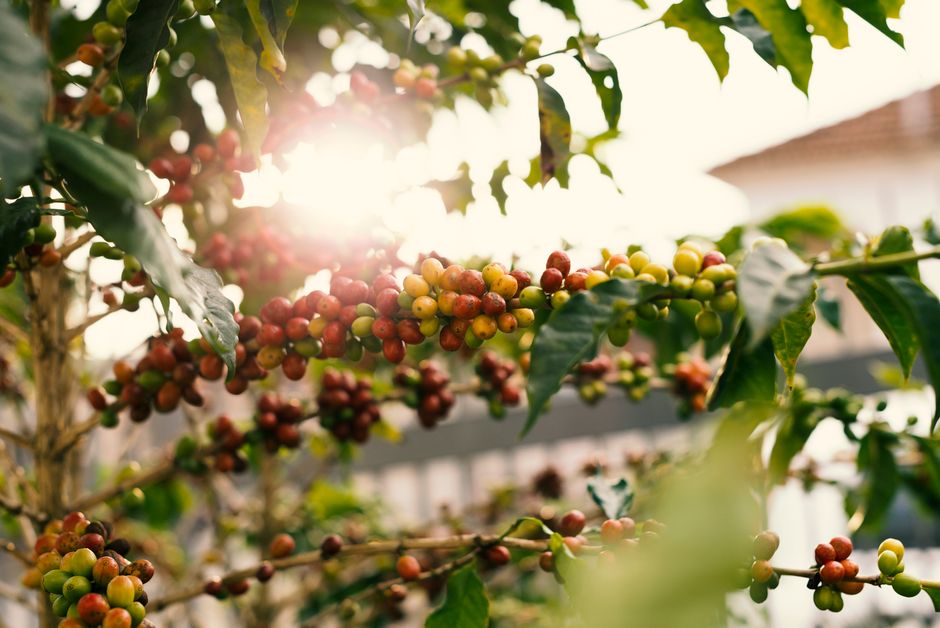
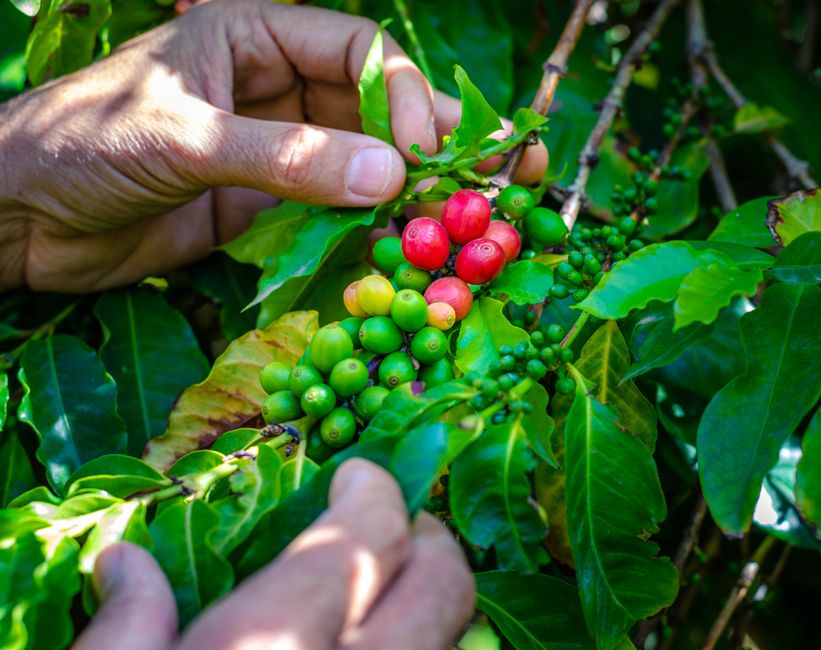
Kona coffee is hand-picked. Every single cherry. The terrain is steep, often too steep for any kind of mechanical harvester, and the cherries on a single branch ripen at different times. Pickers must return to the same trees multiple times throughout the harvest season, selecting only the perfectly red, ripe cherries and leaving the green ones for later. This is slow, expensive work, and it is the single biggest reason Kona coffee costs what it does. When you pay $40 or $50 for a pound of 100% Kona, you are paying for someone's hands, someone's judgment, and someone's willingness to walk those slopes in the humidity day after day.
There are over 900 coffee farms in the Kona district, but the vast majority are tiny operations, some with just an acre or two of trees. Only a handful open their gates to visitors. That scarcity makes the tours that do exist feel less like a commodity and more like an invitation.
Decoding the Labels: 100% Kona vs. Kona Blend vs. Kona Roast
Before you set foot on a farm, it helps to understand what you have been drinking. The labeling situation for Kona coffee is, frankly, designed to confuse tourists, and it works.
The only label that guarantees authenticity is "100% Kona Coffee." That phrase is legally protected. If a bag says 100% Kona, every bean inside came from the Kona district. Period. This is what you want.
Then there is "Kona Blend." By Hawaii state law, a Kona Blend must contain at least 10% Kona beans. The other 90% can be anything: Brazilian, Vietnamese, Colombian, usually whatever is cheapest on the commodity market. Ten percent is not enough to taste the difference. You are paying for the word "Kona" on the label, not for the coffee inside.
The worst offenders are "Kona Roast" and "Kona Style." These terms mean nothing. Legally nothing. A bag labeled Kona Roast could contain zero Kona beans. It might be roasted in Kona, or it might just be roasted in a style that someone decided to call Kona. Either way, you are not getting what you think you are getting.
When you are on a farm tour, ask to see the green coffee, the unroasted beans before they hit the roaster. Green Kona beans have a distinct appearance: they tend to be slightly smaller and more uniform than commodity-grade beans from other origins. Seeing them in their raw state, still resting in burlap sacks with the farm's name stenciled on the side, is a small but satisfying piece of evidence that you have arrived at the real thing.
The Top Kona Coffee Farm Tours Compared
The Best Free Kona Coffee Farm Tours (2026)
Two farms stand out for offering genuinely excellent tours at no cost. These are not abbreviated walk-throughs designed to funnel you into a gift shop. They are full, guided experiences that cover the entire seed-to-cup journey and end with a tasting.
Greenwell Farms: The Historic Heavyweight
Greenwell Farms has been growing coffee on the same land since 1850, which makes it one of the oldest continuously operating coffee farms in Hawaii. The operation has evolved considerably since the 19th century, but the sense of history is still palpable, especially in a section of the farm known as "Grandma's Trees." These two acres were planted between 1900 and 1903, and the original trees are still producing coffee cherries more than 120 years later. Walking among them feels a bit like visiting a living museum, except the trees are not behind glass and nobody minds if you lean in close to look at the fruit.
The free guided tour runs daily from 9:00 AM to 3:00 PM, with groups departing approximately every 30 minutes. No reservation is needed. You show up, you join the next group, and you spend about 45 to 60 minutes walking through the orchard, the wet mill, the drying decks, and the roasting room. The guides are knowledgeable and clearly accustomed to answering questions from people who know nothing about coffee and people who know quite a lot. The tour ends with a tasting of several different roasts, and there is a well-stocked shop where you can buy beans to take home.
Greenwell Farms has been voted "Hawaii's Best Farm Tour" by Hawaii Magazine multiple times, including every year from 2023 through 2026, and it holds a TripAdvisor Traveler's Choice Award for the same period. Those accolades are not handed out lightly, and the farm earns them with a tour that is polished without feeling corporate.
For visitors who want a deeper experience, Greenwell offers a Deluxe Tour and Tasting at $59.95 per person, with a minimum of two people. This version includes a more intimate group size, a guided cupping session, and access to areas not covered on the free tour. Note that children under 12 cannot be accommodated on the Deluxe Tour, so families with younger kids should stick to the free option.
Rising Kona Coffee Farm Tours: The Family Favorite
Rising Kona has built a reputation largely through word of mouth and a staggering number of five-star reviews. With over 4,000 tours conducted, more than 100 brew classes, and 150-plus roasting tours under its belt, the farm holds a perfect 5.0 rating on Google based on 750 reviews. That kind of consistency is rare in any business, let alone one that deals with the unpredictable nature of farming and hospitality.
The free tour at Rising Kona covers the expected ground: orchard walk, processing explanation, roasting demonstration, and tasting. But what sets this farm apart is the "Brew Tour and Goat Petting" experience. Yes, goats. The farm keeps a small herd, and visitors, especially children, are welcome to interact with them. It is a simple addition, but it transforms the tour from a standard agricultural visit into something that families genuinely enjoy from start to finish. Parents get their coffee education, kids get goats, and everyone leaves happy.
Rising Kona also offers paid add-ons for those who want to go deeper, including brew classes and hands-on roasting sessions. Reservations are recommended even for the free tour, as group sizes are kept manageable and walk-in availability is not guaranteed.
The Best Paid and Premium Kona Coffee Tours
Heavenly Hawaiian: The Interactive Experience
Heavenly Hawaiian sits on a hillside with a view that alone justifies the drive. The farm has been growing coffee since 1994 and runs tours Monday through Saturday, every hour from 9:00 AM to 4:00 PM. The tour is paid, and the pricing falls in the standard range for the area, but what you get for your money goes beyond the typical walk-and-taste format.
The standout feature at Heavenly Hawaiian is the opportunity to hand-rake drying coffee beans. After the cherries are processed, the beans are spread out on large drying decks, and they must be turned regularly to ensure even drying. Visitors are invited to pick up a rake and do the turning themselves. It is a small, tactile moment, but it connects you to the process in a way that simply watching never does. You feel the weight of the beans, the resistance of the rake, the warmth of the sun on the concrete. It is the kind of detail that sticks in your memory long after the tasting is over.
The farm is also home to seven resident cats, which patrol the property with the quiet authority of animals who know they live in paradise. For some visitors, the cats are the highlight. For others, the highlight is the coffee itself. Heavenly Hawaiian produces a "Fire Roast" using a restored 1947 peanut roaster, which imparts a distinctive character to the beans. They also make "Kona Sweet," a coffee processed by drying the beans while they are still inside the fruit, a method that yields a notably smooth, sweet cup. And for true connoisseurs, the farm grows Geisha coffee trees, a varietal that produces beans selling for upwards of $308 per pound. Tasting Geisha coffee at the source is a bucket-list experience for serious coffee people.
Hala Tree Coffee: The Hands-On Workshop
Hala Tree takes a different approach from most Kona coffee farms. Instead of a single standardized tour, the farm offers separate workshops focused on specific skills: roasting, brewing, and cupping. This modular structure lets visitors choose exactly how deep they want to go. Someone who just wants a pleasant morning can take the basic tour. Someone who wants to learn how to roast coffee at home can book the roasting workshop and spend real time with the equipment and the techniques.
The farm itself is perched on a slope with sweeping views of the Kona coast, and the setting is one of the most photogenic on the belt. The workshops are small by design, which means you get significant one-on-one time with the instructor. For coffee enthusiasts who have already done a standard farm tour elsewhere and want something more technical, Hala Tree is the obvious choice.
Kona Coffee Living History Farm: The Cultural Museum
The Kona Coffee Living History Farm is unlike any other stop on this list. Operated by the Kona Historical Society, it is the only living history coffee farm in the United States. The focus here is not on modern production methods or tasting flights. It is on the lives of the Japanese immigrant families who built the Kona coffee industry in the early 20th century.
Costumed interpreters demonstrate daily tasks: cooking on a wood stove, tending the vegetable garden, repairing tools, and of course, picking and processing coffee using the methods of the era. The farmhouse, the outbuildings, the equipment, all of it is authentic to the period. You leave with an understanding of Kona coffee not as a luxury product but as a way of life that demanded relentless labor and deep resilience from the people who lived it.
This is a museum-style experience, quieter and more contemplative than the commercial farm tours. It pairs well with a visit to one of the working farms, giving you the historical context that makes the modern tasting experience feel richer and more meaningful.
How to Choose the Right Tour for You
Free vs. Paid Tours: What Is the Real Difference?
The free tours at Greenwell Farms and Rising Kona are not stripped-down teasers designed to upsell you. They are complete experiences that cover the full seed-to-cup story, include a tasting, and give you ample opportunity to ask questions. For most visitors, a free tour is more than sufficient. You will learn how coffee grows, how it is processed, how it is roasted, and how to taste the difference between a dark roast and a medium roast. You will walk through an orchard, see the machinery, and leave with a solid understanding of why Kona coffee commands the price it does.
Paid tours add layers. The group sizes are smaller, which means more direct interaction with the guide. The content goes deeper into topics like cupping protocols, roast profiles, and varietal differences. Some paid tours, like the workshops at Hala Tree, let you do the work yourself: roast a batch, brew a pour-over, evaluate a flight of samples. The Greenwell Deluxe Tour includes a structured cupping session that teaches you how professionals evaluate coffee, a skill you can take home and use at your local roaster.
The decision comes down to self-awareness. If you are a casual coffee drinker who enjoys a good cup but does not own a scale or a gooseneck kettle, the free tour will satisfy you completely. If you grind your beans fresh every morning and have opinions about water temperature, pay for the premium experience. You will not regret it.
Tour Logistics: What You Need to Know Before You Go
Most Kona coffee farm tours last between 45 and 60 minutes for the standard experience. Plan for about 90 minutes total, including the tasting and time to browse the gift shop. Paid and deluxe tours can run up to two hours.
Reservations are not required for the free tour at Greenwell Farms, which operates on a walk-in basis with groups departing roughly every half hour. For Rising Kona, reservations are strongly recommended even for the free tour. For all paid tours, including Heavenly Hawaiian, Hala Tree, and the Greenwell Deluxe, you should book in advance. These tours have limited capacity and can fill up, especially during peak travel seasons.
Accessibility is a real consideration. These are working farms, not paved attractions. The terrain is typically unpaved, uneven, and sometimes steep. Visitors with mobility issues, or those using wheelchairs or walkers, will find most tours challenging. If accessibility is a concern, call the farm directly before booking and ask about the specific conditions on the day of your visit. Some farms may be able to accommodate with advance notice, but the baseline assumption should be that you will be walking on gravel and grass.
You will need a rental car. The farms are spread out along the Mamalahoa Highway, also known as Highway 11, which winds through the Kona Coffee Belt. There is no public transportation that serves these locations in any practical way. Parking is free and generally plentiful at all the farms mentioned in this guide. The drive itself is part of the experience, with views that open up as you climb in elevation. Give yourself time to pull over and take in the coastline.
Seasonal Considerations and Pro Tips
Best Time of Year to Visit a Kona Coffee Farm
Kona coffee farms are open for tours year-round, but the experience changes with the seasons. If you want the most visually spectacular visit, aim for bloom season, roughly January through March. During these months, the coffee trees erupt in white blossoms, a phenomenon locals call "Kona Snow." The flowers are delicate, fragrant, and fleeting, lasting only a few days before they drop and the cherries begin to form. Seeing an orchard in full bloom, with the white blossoms contrasting against the dark green leaves and the blue ocean in the distance, is worth planning your trip around.
If you want to see the action, visit during harvest season, which runs from approximately August through January. This is when the trees are heavy with red cherry, the picking crews are working the slopes, and the processing equipment is running. You will see the wet mill in operation, the pulping machines removing the fruit from the beans, and the drying decks covered with parchment coffee. The harvest months offer the most complete picture of the coffee production cycle.
Even outside these windows, a tour is still worthwhile. The trees are evergreen, the processing facilities are interesting regardless of whether they are actively running, and the tasting at the end tastes just as good in June as it does in November.
Tips for an Authentic Kona Coffee Experience
Buy your coffee directly from the farm. The beans you purchase at the farm shop were likely roasted within the past few days or weeks, and they come with a story you can tell when you serve them at home. The bags sold at resort gift shops and airport kiosks may have been sitting on a shelf for months, and the markup is often higher than what you will pay at the source. Most farms can ship to the mainland United States, so you do not need to worry about suitcase space. Ask about shipping options at the register.
Ask questions. The people running these tours are farmers, roasters, and often the owners themselves. They have spent years or decades learning the craft, and they are generally happy to talk about it in detail. Ask about their drying method. Ask about the elevation of their orchard. Ask what varietals they grow and why. The more you engage, the more you will get out of the experience.
Pace yourself. The Kona Coffee Belt is not a single concentrated area where you can hop from farm to farm in an afternoon. The farms are spread out along a winding two-lane highway, and trying to cram three tours into one day will leave you rushed and over-caffeinated. Pick one or two farms that match your interests, give yourself time to enjoy them properly, and treat the drive between them as part of the experience rather than an obstacle.
Your Kona Coffee Tour Questions, Answered
What is the best coffee farm tour in Kona?
There is no single best tour, because different farms suit different travelers. Greenwell Farms is the best choice for history and a polished free experience. Rising Kona is the best choice for families with children, thanks to the goat petting and welcoming atmosphere. Hala Tree is the best choice for coffee enthusiasts who want hands-on workshops. Heavenly Hawaiian is the best choice for interactive elements like raking beans and tasting unique roasts. The Kona Coffee Living History Farm is the best choice for cultural and historical context.
How much does a Kona coffee tour cost?
Prices range from free to $59.95 per person for standard tours. Greenwell Farms and Rising Kona both offer free tours. Heavenly Hawaiian and Hala Tree charge in the $20 to $50 range. The Greenwell Deluxe Tour and Tasting costs $59.95 per person with a minimum of two people. There is one outlier on the island, an ATV tour that runs $190 per person, but that is a completely different category of experience.
What is the free coffee tour in Kona, Hawaii?
The two most popular free tours are at Greenwell Farms and Rising Kona Coffee Farm Tours. Greenwell Farms offers free guided tours daily from 9:00 AM to 3:00 PM with no reservation required. Groups depart approximately every 30 minutes. Rising Kona also offers a free tour, but reservations are recommended to guarantee a spot.
How long do Kona coffee farm tours last?
The typical free tour lasts 45 to 60 minutes. Paid and deluxe tours can run up to two hours. Plan for about 90 minutes total at the farm, including the tasting and time in the gift shop.
Plan Your Perfect Kona Coffee Adventure
A morning spent on a Kona coffee farm is one of those travel experiences that delivers more than you expect. It is not just about the coffee, though the coffee is excellent. It is about standing on a hillside where the air smells like jasmine and ripe fruit, listening to someone explain how their grandparents planted the trees you are standing under, and tasting something that was grown, picked, processed, and roasted within a few miles of where you are sitting.
Pick the tour that matches your style. If you want value and a solid overview, the free tours at Greenwell Farms and Rising Kona will serve you well. If you want to get your hands dirty, literally or figuratively, book a workshop at Hala Tree or the deluxe experience at Greenwell. If you want to understand the human history behind the cup, spend an hour at the Living History Farm. Whatever you choose, book ahead for paid tours, wear comfortable shoes, and leave room in your suitcase for a few bags of 100% Kona coffee. The stuff you bring home will taste better than anything you have ever bought at a grocery store, because you will know exactly where it came from and whose hands made it possible.
