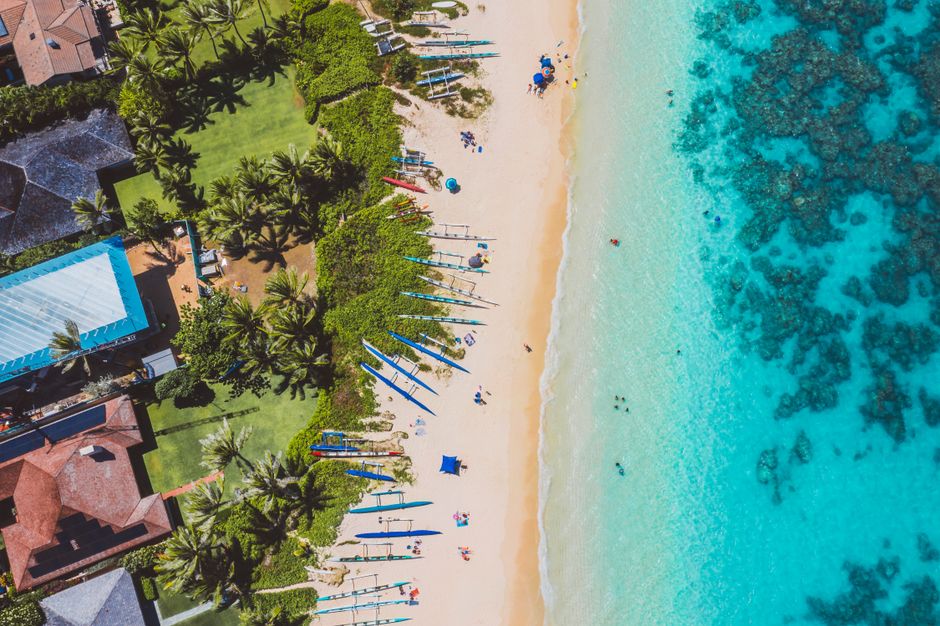
Fishing from shore in Hawaii is one of the most accessible and rewarding outdoor experiences the islands offer, and the best news for visitors and newcomers is that no saltwater fishing license is required. You can walk to the water's edge with a rod in hand and cast into some of the richest marine ecosystems on the planet without a permit, a fee, or a complicated application. That freedom is rare in the United States, and it opens the door to a style of fishing that connects you directly to Hawaiian culture, local food traditions, and the raw power of the Pacific. This guide covers everything you need to know for 2026: the rules, the fish, the gear, the rigs, the bait, the best spots on every major island, seasonal timing that no other major source has compiled, safety protocols, conservation etiquette, and a realistic budget breakdown. Whether you are a first-timer packing a travel rod or an experienced angler chasing a trophy ulua from the cliffs, the information here is built to get you on fish.
Table of Contents
- Is Shore Fishing Legal in Hawaii? Rules, Licenses & Regulated Areas
- What Fish Can You Catch from Shore in Hawaii? Native Species Guide
- Essential Gear for Shore Fishing in Hawaii
- Best Shore Fishing Spots by Island (2026 Update)
- When to Fish: Seasonal Timing, Tides & Weather (2026 Calendar)
- Safety First: Hazards Every Shore Angler Must Know
- Conservation & Local Etiquette: The Visitor's Code of Conduct
- Budget Breakdown: DIY Shore Fishing vs. Charter Costs (2026)
- Frequently Asked Questions About Shore Fishing in Hawaii
- Final Tips for Your 2026 Hawaii Shore Fishing Trip
Is Shore Fishing Legal in Hawaii? Rules, Licenses & Regulated Areas
The single most common question from travelers is whether they can legally fish from shore in Hawaii, and the answer is an unambiguous yes. Recreational pole fishing from ocean shores requires no license, no permit, and no registration. This applies to residents and visitors alike. You can fish with a rod and reel, a hand pole, or a bamboo pole from any public shoreline access point without paperwork. That simplicity is a genuine advantage over mainland states, where saltwater licenses are the norm.
The freedom comes with boundaries. The no-license rule applies strictly to recreational fishing with a pole. Spearfishing requires a separate permit, as does any form of net fishing beyond small hand nets used for landing a hooked fish. Freshwater fishing anywhere in the state demands a freshwater game fishing license. Selling your catch, even casually, crosses into commercial territory and triggers a different set of regulations, including a commercial marine license and adherence to health department standards.

The Department of Land and Natural Resources, known locally as DLNR, designates regulated fishing areas on every major island. Oahu, Maui, Kauai, and the Big Island all have zones where fishing is restricted or prohibited. These include marine life conservation districts, fish replenishment areas, and specific shoreline reserves. Hanauma Bay on Oahu, for example, is a protected marine life conservation district where fishing of any kind is illegal. Similar restrictions apply to sections of the Kona coast on the Big Island and parts of Molokini off Maui, though Molokini is a boat-access location. Shoreline closures can be seasonal, permanent, or tied to specific species protections.
Ignorance of these boundaries does not excuse penalties. Fines for fishing in a restricted area can run into the hundreds of dollars, and enforcement officers do patrol popular shorelines. The DLNR website maintains current listings for each island, and checking those listings before you fish is the single most important preparation step beyond packing your gear. Some areas also have bag limits or minimum size requirements for certain species, particularly for prized fish like moi, the Pacific threadfin, which has a closed season and strict take rules to protect spawning populations.
Visitors accustomed to mainland regulations should understand that Hawaii's no-license policy is not a loophole or an oversight. It reflects a cultural recognition that ocean fishing is a traditional subsistence practice and a birthright for island residents. The responsibility that comes with that freedom is self-education. You are expected to know where you are fishing and what rules apply. Local anglers generally appreciate visitors who show up informed and respectful, and the fastest way to lose goodwill is to fish a closed area because you did not bother to check.
What Fish Can You Catch from Shore in Hawaii? Native Species Guide
The variety of fish accessible from Hawaiian shorelines surprises anglers who arrive expecting only small reef species. More than 25 native species are catchable from shore, ranging from pan-sized table fish to monsters that will test your gear, your knots, and your endurance. Learning the local names and habits of these fish is part of the experience, and using Hawaiian names at the bait shop or on the shoreline signals respect for the culture.
The crown jewel of shore fishing in Hawaii is the ulua, the giant trevally. These apex predators can reach approximately 180 pounds, and catching one from shore is considered the pinnacle of the sport. Ulua are powerful, intelligent fish that strike hard and fight harder, often running for reef structure the moment they feel the hook. Landing a large ulua from a rocky shoreline requires skill, patience, and heavy tackle. Smaller jacks under 15 pounds are called papio, and they are a favorite target for both eating and sport. Papio are aggressive, fast, and delicious when prepared fresh. They respond well to whipping techniques and provide consistent action when larger ulua are scarce.

Bonefish, called o'io in Hawaiian, are a premier target on sandy flats and in protected bays. Hawaii is home to some of the largest bonefish in the world, particularly in Kaneohe Bay on Oahu. O'io are wary, fast, and pound-for-pound one of the strongest fighters in the shallows. They are typically caught on bait rather than flies, though fly anglers who put in the time can find success on the flats.
Other notable shore species include barracuda, known locally as kaku, which strike with startling speed and have sharp teeth that demand wire leaders. Bluefin trevally, called omilu, are strikingly beautiful fish with electric blue fins and a reputation for hard fights. Goatfish, or moana, are prized table fare and can be caught in sandy-bottom areas using small baits. Pacific threadfin, called moi, was once reserved for Hawaiian royalty and remains one of the most sought-after eating fish in the islands. Moi have strict seasonal closures, so check regulations before targeting them. Triggerfish, known as hate, are common around reef structure and put up a surprisingly strong fight for their size. Sharks, called mano, are an ever-present possibility when dunking large baits, and while most anglers release them, they provide an unforgettable fight.
For eating quality, several species stand out. Moana, snapper, and papio are consistently excellent on the table. Mahi-mahi and ono are occasionally accessible from shore at select deep-water locations, though they are more commonly boat-caught. Yellowfin tuna, called ahi, average around 125 pounds in Hawaiian waters and are a bucket-list catch, but shore access to ahi is limited to rare circumstances where deep water runs close to land, such as certain Big Island spots. The one species to actively avoid eating is the peacock grouper, known locally as roi. Roi carry ciguatera toxin, which accumulates in reef fish that feed on toxic dinoflagellates. Ciguatera is not destroyed by cooking, and the resulting illness can be severe and long-lasting. If you catch a roi, handle it carefully and release it.
Essential Gear for Shore Fishing in Hawaii
Rods, Reels & Line
The right gear for Hawaiian shore fishing balances durability, versatility, and cost. Saltwater is unforgiving on equipment, and the volcanic rock that lines much of the coastline is harder on rods and reels than any sandy beach. A 7 to 9 foot rod is the recommended all-purpose length. This range gives you enough casting distance to reach beyond the breakers while maintaining the sensitivity needed to detect subtle strikes. Ugly Sticks are frequently cited by local anglers as the affordable, nearly indestructible option. They handle the abuse of rocky shorelines, they flex enough to absorb the shock of a sudden ulua strike, and they cost little enough that you will not be heartbroken if a wave claims one.
Line choice matters. 15 pound test monofilament is the sweet spot for most shore applications. It is strong enough to turn a decent papio away from the reef, light enough to cast well with whipping rigs, and forgiving enough that knots hold under pressure. Braided line in the 20 to 30 pound range is an alternative for anglers targeting larger ulua, offering thinner diameter and better sensitivity, but it requires more careful knot work and is less forgiving around sharp rocks.
Spinning reels are the most versatile choice for beginners and experienced anglers alike. They are easier to cast in wind, simpler to maintain, and handle the sand and salt spray that are constant companions in shore fishing. Baitcasters offer more control and greater cranking power for large fish, but they demand more skill and are less tolerant of the grit and grime of shoreline conditions. A quality spinning reel in the 4000 to 6000 size range, spooled with 15 to 20 pound line, will handle 90 percent of what you encounter from shore.
Rod action and power are distinct concepts that matter for technique selection. Fast action rods flex primarily near the tip, providing sensitivity for detecting light strikes when whipping. Moderate power rods have more backbone through the midsection, which matters when you are dunking bait and need to drive a hook home on a large fish while absorbing head shakes. If you can bring two rods, rig one for whipping and one for dunking. That setup lets you switch tactics without re-rigging, maximizing productive time when the bite window is short.
Rigs: Whipping vs. Dunking Explained
Two techniques dominate shore fishing in Hawaii, and understanding both gives you options for any condition. Whipping is the active, mobile approach. Dunking is the patient, heavy-hitting method. Each has its rig, its rhythm, and its ideal conditions.
Whipping involves casting a soft-bodied grub or similar lure and retrieving it with a rhythmic, twitching motion that mimics a fleeing baitfish. The standard whipping rig is a modified Carolina rig: a sliding egg sinker above a swivel, a leader of 18 to 30 inches, and a soft plastic grub on a lead-head jig. The sinker slides freely on the main line, allowing the grub to move naturally while the weight provides casting distance. Retrieve speed varies with conditions and target species. Papio often respond to a fast, erratic retrieve that triggers their chase instinct. O'io and more cautious feeders may require a slower, bottom-bouncing presentation. The key to whipping is covering water. You walk the shoreline, cast to likely structure, and keep moving until you find feeding fish.
Dunking is the stationary counterpart. The standard dunking rig is a three-way breakaway setup designed to present bait naturally while holding position in current and surf. A three-way swivel connects the main line, a leader to the hook, and a shorter drop line to a sinker. The breakaway feature means the sinker is attached with lighter line or a rubber band that releases on the strike or during the cast, allowing the bait to drift freely once it settles. This prevents the fish from feeling resistance when it picks up the bait. Dunking rigs are typically baited with live or cut bait and cast into channels, off points, or along drop-offs where larger fish cruise. The rod is placed in a holder, the angler waits, and the strike, when it comes, is often violent.
No static visual diagrams of these rigs currently appear in the top organic search results, which is a significant gap for a technique-driven activity. The three-way breakaway rig in particular benefits from a clear visual: main line to the top ring of the three-way swivel, hook leader of 24 to 36 inches to one side ring, and a drop line of 6 to 12 inches to the bottom ring, with the sinker attached via a breakaway connection. Practice tying these rigs before your trip. Knot failure at the swivel or hook is the most common reason fish are lost, and retying in the dark or in wind is a skill that comes with repetition.
Bait: Live vs. Dead Options
Bait selection in Hawaii is specific and local. Generic advice about worms or cut bait from mainland sources does not translate well. The fish here key in on particular prey species, and matching the hatch, as freshwater anglers say, makes a measurable difference.
Live bait is the gold standard for both whipping and dunking. Oama, juvenile goatfish, are perhaps the most versatile and effective live bait for shore fishing. They are hardy, they stay alive on the hook, and nearly every predatory fish in Hawaiian waters eats them. Halalu, juvenile big-eyed scad, are another top-tier option, particularly for larger papio and ulua. Nehu, the Hawaiian anchovy, is smaller and works well for goatfish and smaller jacks. O'pae, freshwater shrimp, are effective in brackish areas where streams meet the ocean. Sand turtles, known on the mainland as mole crabs, can be dug directly from the wet sand at the water's edge and are free, effective bait for papio and o'io. Digging your own sand turtles is a skill worth learning: look for small V-shaped disturbances in the receding wave wash, scoop a handful of sand, and sift.
Dead and cut bait options are essential backups when live bait is unavailable or when targeting larger fish that respond to scent trails. Oama works just as well cut into strips or chunks. Tako, octopus, is a durable bait that stays on the hook in heavy surf and releases a strong scent that ulua find irresistible. Ika, squid, is widely available at bait shops and grocery stores and works well for a variety of species. Aku belly, the fatty belly meat of skipjack tuna, is a traditional cut bait that releases an oil slick that draws fish from a distance. California shrimp, available frozen at most island tackle shops, is a reliable standby.
Local bait shops on each island carry the most reliable live options, and asking the shop owner what is working right now is always a smart move. Bait availability shifts with season and ocean conditions. Match bait size to your target: small, whole baits for papio and goatfish, larger cut chunks or whole fish for ulua and sharks.
Best Shore Fishing Spots by Island (2026 Update)
Oahu
Oahu is the most populated and most heavily fished island in the chain, and local anglers are candid about the pressure. Some areas are described bluntly as fished out, a reality that means visitors should manage expectations and focus on less-pressured spots. That said, Oahu still offers quality shore fishing, particularly for bonefish.
Kaneohe Bay is the premier o'io destination on the island, and locals claim some of the world's largest bonefish patrol its extensive sand flats. The bay is best fished at dawn, when the water is calm and the fish are actively feeding in the shallows. Wading the flats with light tackle and small baits is the standard approach. White Plains Beach and Sand Island are also recommended by local Reddit communities for bonefish dunking, with the added advantage of easier access and parking.
For visitors who want a guided experience, Shoreline Fishing O'ahu operates as a bookable tour activity. Reviews cite catches of eel, bonefish, and the Hawaiian state fish, the humuhumunukunukuapua'a, in a single three-hour session. A guide can compress the learning curve significantly and provide access to spots that are not obvious from public maps. The south shore and windward sides offer the most consistent action, while the north shore's massive winter surf limits shore fishing opportunities from November through March.
Big Island (Hawai'i Island)
The Big Island offers the most dramatic shore fishing in the state, driven by geography that drops into deep water startlingly close to land. Kailua-Kona is the premier big-game fishing location in Hawaii, with marlin, tuna, and mahi-mahi appearing just one to two miles from shore. While those pelagic species are typically boat-caught, the same nutrient-rich currents and steep drop-offs that make Kona a world-class offshore destination also push large fish within casting range of the shoreline. Fish over 1,000 pounds are possible from Kona waters, and while a shore-caught grander is a rare feat, the potential for a life-changing fish is real.
The "Braddahs On Da Shore" YouTube playlist, with 133 videos documenting years of Big Island shore fishing, provides an invaluable visual resource for specific spots. Puako offers accessible shoreline with good papio action. South Point is legendary for cliff fishing but demands extreme caution due to high cliffs, strong currents, and unpredictable waves. Pololu Valley requires a hike down to the shoreline but rewards with pristine, low-pressure waters and a stunning backdrop. Micro fishing for small bait fish has a dedicated following on the Big Island, with anglers targeting tiny species using ultralight tackle for the simple joy of seeing what lives in the shallows.
The Kona coast's accessibility makes it the best entry point for visitors. Public access points line Ali'i Drive, and the mix of sandy bottom and lava rock structure creates habitat for a wide range of species. Morning and evening hours are most productive, and the afternoon trade winds can make casting difficult.
Maui
Maui offers reef fishing and occasional tuna opportunities from shore, with a coastline that ranges from sandy beaches to rugged lava points. The "Maui shore fishing map" search query indicates strong demand for visual, location-based resources, and while no comprehensive map exists in the top results, the island's public access points are well-documented by the DLNR.
The south shore from Kihei to Makena offers accessible fishing with parking nearby, making it a good choice for families and anglers who prefer not to hike long distances. The west shore around Lahaina has productive reef structure, though resort shoreline restrictions mean you need to verify public access before setting up. Morning and evening hours are most productive across the island. Midday sun pushes fish deeper, and the heat can be punishing on exposed shoreline.
Maui's north shore, like Oahu's, is subject to large winter surf that makes shore fishing dangerous and unproductive from November through March. The east side around Hana is lush, remote, and less pressured, but access often requires hiking and the coastline can be treacherous. Family-friendly spots with parking and easy access exist, though no comprehensive accessibility guide currently exists for Maui shore fishing. The best approach is to scout during daylight, identify safe access points, and fish the dawn hours.
Kauai
Kauai offers some of the least-pressured shore fishing in the state, a function of its smaller population and tourist footprint. Healthy papio and o'io populations are accessible from multiple shoreline points, and the competition for prime spots is minimal compared to Oahu.
The Na Pali Coast is the island's most dramatic fishing destination, accessible only by boat or by hiking the Kalalau Trail. Anglers who make the trek report excellent fishing in pristine conditions, but the logistics are extreme. The trail is strenuous, permits are required for overnight stays, and the coastline is exposed to open-ocean swells. This is an adventure for experienced anglers with backcountry skills.
For visitors seeking easier access, the north shore and east side spots offer productive fishing without the extreme commitment. Hanalei Bay has sandy bottom areas that hold o'io, and the rocky points around Kilauea produce papio. Check DLNR listings for seasonal closures, as some north shore areas have restrictions tied to marine life protections. Kauai's slower pace extends to its fishing culture. Local anglers are generally welcoming, and the unhurried atmosphere makes it an ideal island for beginners who want to learn without the pressure of crowded shorelines.
When to Fish: Seasonal Timing, Tides & Weather (2026 Calendar)
This section addresses the single largest content gap in existing shore fishing resources for Hawaii. No major source currently provides a month-by-month fishing calendar, and the question "What is the best month to fish in Hawaii?" appears in search data without a clear answer. The following guidance is built from local knowledge, ocean patterns, and species behavior.
Summer months, May through September, offer the most consistent and beginner-friendly conditions. Trade winds are steady and predictable, typically blowing from the northeast at 10 to 20 miles per hour. Seas are calmer on south and west-facing shores, which are the most accessible for shore fishing. Water clarity is generally good, and baitfish populations are abundant. This is the ideal window for whipping, as papio and other jacks are active in the shallows and respond well to lures. The consistent weather also makes summer the best season for visitors who want to fish multiple days without weather disruptions.
Winter months, November through March, bring larger surf to north and west-facing shores as North Pacific storms generate swells that travel thousands of miles to Hawaiian waters. This surf makes many popular shore fishing spots dangerous or unfishable, but it also pushes larger fish closer to shore in protected areas. Experienced dunkers target ulua during winter, as the big jacks move into shallower water to feed in the turbulent conditions. South and east-facing shores become the primary winter options, as they are sheltered from the dominant swell direction. Winter fishing demands more caution, better gear, and a willingness to adapt plans based on daily surf reports.
The King's Tide phenomenon, which recently produced the highest tide in 112 years, illustrates how extreme tidal events create rare fishing opportunities. King Tides occur when the gravitational alignment of the sun and moon coincides with seasonal sea level highs, pushing water far above normal levels. These events flood areas that are normally dry, giving fish access to new feeding grounds and concentrating bait in unusual patterns. Monitoring tide charts for exceptional high tides can put you on fish that are otherwise inaccessible.
Moon phases matter for shore fishing success. Full and new moons produce stronger tidal movement, which triggers feeding activity across a wide range of species. The increased water movement stirs up bait and creates current lines where predators ambush prey. Planning trips around these lunar windows, particularly the three days before and after a full or new moon, increases your odds. Dawn and dusk during these periods are especially productive.
Weather patterns follow a general rhythm. Post-frontal clearing, the period after a storm passes and the barometric pressure rises, often produces aggressive feeding as fish that held deep during the low-pressure system move shallow to feed. Heavy rain runoff can muddy near-shore waters and slow fishing for a day or two, particularly near stream mouths. The key weather variable for shore fishing is wind. Strong onshore winds make casting difficult and churn up the shallows. Offshore winds, blowing from land to sea, flatten the water surface and can create excellent conditions.
Safety First: Hazards Every Shore Angler Must Know
Shore fishing in Hawaii is genuinely dangerous in ways that sandy-beach fishing on the mainland is not. The combination of volcanic rock, powerful surf, and remote locations demands awareness and preparation.
Slippery rocks are the number one hazard. Lava rock, especially when wet or covered with algae, is treacherously slick. Falls on this terrain result in cuts, sprains, broken bones, and worse. Non-slip reef shoes or boots with good grip are not optional equipment for rocky shoreline fishing. Felt-soled boots designed for wading provide the best traction on algae-covered rock. Test your footing before committing weight to a step, and never run or jump on wet rock, even if you see a fish.
High surf and sneaker waves kill anglers every year in Hawaii. A sneaker wave is a wave that is significantly larger than the prevailing set, and it can sweep across rocks that appeared dry and safe moments before. Never fish with your back to the ocean. Position yourself so you can see incoming waves at all times. If a rock is wet, waves have reached it recently. If you are on a ledge above the water, know your escape route before you cast. The ocean in Hawaii is powerful and unpredictable, and the consequences of being swept off rocks into churning surf are severe.
Sharp reef edges and coral cuts are common and can become infected quickly in tropical conditions. Carry a basic first-aid kit with antiseptic wipes, antibiotic ointment, and waterproof bandages. Clean any cut thoroughly with fresh water as soon as possible. Coral contains living organisms that can cause persistent infections if left in a wound.
Sun exposure in Hawaii is extreme, even on overcast days. The islands sit at roughly 20 degrees north latitude, meaning the sun is more direct than in most of the continental United States. Use reef-safe sunscreen, which avoids the chemicals oxybenzone and octinoxate that damage coral reefs. Wear a hat, long sleeves if possible, and polarized sunglasses that cut glare and help you see fish in the water. Bring more water than you think you need. Dehydration sets in quickly when you are standing on reflective rock or sand for hours, and many shore fishing spots have no shade and no water source.
Ciguatera risk is real and deserves attention. The toxin accumulates in reef fish that feed on toxic dinoflagellates, and it becomes more concentrated in larger, older fish that have eaten many smaller fish. Peacock grouper, or roi, is the species most consistently associated with ciguatera in Hawaii, and it should not be eaten under any circumstances. Other large reef predators, including large ulua and barracuda, carry some risk, particularly in areas where ciguatera is known to occur. The toxin is odorless, tasteless, and not destroyed by cooking, freezing, or any form of preparation. If you are unsure about a fish, ask a local angler or release it. The safest eating fish from shore are smaller papio, goatfish, and other species that feed lower on the food chain.
Conservation & Local Etiquette: The Visitor’s Code of Conduct
Fishing in Hawaii carries cultural weight that extends beyond sport. The ocean is a source of food, identity, and tradition for Hawaiian people, and visiting anglers who show respect for that relationship are welcomed. Those who do not are not.
Use barbless hooks when possible. Barbless hooks cause less damage to fish you plan to release, are easier to remove, and reduce handling time. If you cannot find barbless hooks, pinch the barbs down with pliers before fishing. This small adjustment significantly improves survival rates for released fish.
Release large brooding fish, particularly female ulua. These are the breeders that sustain future populations, and their reproductive value far exceeds their value as a single meal or trophy photo. A large female ulua can produce millions of eggs in a spawning season. If you catch one, take a quick photo while keeping the fish in or near the water, remove the hook carefully, and release it to swim away. The respect you show for these fish is noticed by local anglers.
Invasive species like taape, the bluestripe snapper, can be targeted freely and without guilt. Taape were introduced to Hawaiian waters in the 1950s and compete with native species for food and habitat. Fishing for invasives is a conservation activity that helps native ecosystems, and taape are excellent eating. Learn to identify them: they have a blue stripe running horizontally along the body and yellow fins.
Pack out everything you bring in. Many shore fishing spots are remote with no trash services, and monofilament line in particular is a deadly hazard for marine life. Discarded line entangles birds, turtles, and fish. Carry a small bag for trash and spent line, and leave the spot cleaner than you found it.
Respect local anglers' space. If someone has claimed a spot, find another location rather than crowding them. The shoreline is public, but the unwritten rule is that the first angler to arrive has the right to fish without company. A friendly nod and a question about how the fishing has been goes a long way toward establishing good relations.
Learn a few Hawaiian fish names and use them. Calling a fish by its Hawaiian name, papio instead of jack, o'io instead of bonefish, signals that you have done your homework and respect the local fishing culture. Fishing is deeply woven into Hawaiian tradition, and the language carries that history.
Budget Breakdown: DIY Shore Fishing vs. Charter Costs (2026)
Shore fishing in Hawaii can be one of the most affordable activities on a trip that is otherwise expensive, or it can be a significant investment depending on your approach. Understanding the costs upfront helps you plan.
A complete DIY shore fishing setup can be assembled for $100 to $200. A 7-foot Ugly Stick rod runs approximately $40 to $60. A quality spinning reel in the 4000 to 6000 size range costs $40 to $80. Spooling with 15-pound monofilament adds $10 to $15. Terminal tackle, including swivels, hooks, sinkers, and soft plastic grubs, adds another $20 to $30. This basic setup will handle whipping and light dunking and will last through a trip with reasonable care. If you are visiting and do not want to travel with a rod, many tackle shops on the islands rent equipment, and some Airbnb hosts and vacation rentals include fishing gear for guest use.
Bait costs vary widely. Sand turtles are free if you dig them yourself from the wet sand at the water's edge. Live oama runs $5 to $10 per dozen at bait shops when available. Frozen squid and tako cost $5 to $8 per pack at grocery stores and tackle shops. A day of fishing with purchased bait might cost $15 to $25, which is negligible compared to most Hawaii vacation expenses.
Charter costs represent the other end of the spectrum. Shared trips or guided shore fishing excursions run up to $200 per person. Half-day boat charters are the budget option for visitors who want a boat experience, typically running $100 to $150 for a shared trip. Kailua-Kona charters targeting big-game species command premium pricing, often $250 to $400 for a full day, but they offer the only realistic shot at marlin or large tuna for anglers without their own boat.
For visitors, the smart financial play is clear. Bring or buy a basic shore setup, fish public access points for free, and book one charter only if big-game fishing is a bucket-list priority. The DIY approach gives you the freedom to fish on your schedule, the satisfaction of figuring out the local conditions, and a deeper connection to the shoreline than a charter can provide.
Frequently Asked Questions About Shore Fishing in Hawaii
Can I fish from shore in Hawaii? Yes. No license is required for recreational pole fishing from ocean shores anywhere in the state. This applies to residents and visitors. You can walk to the water and fish.
What is the best bait for shore fishing in Hawaii? Live bait outperforms dead bait in most situations. Oama, halalu, nehu, o'pae, and sand turtles are the top live options. Dead and cut bait options include tako, ika, and aku belly. Match your bait to your target species and to what is locally available.
What is the best month to fish in Hawaii? Summer months, May through September, offer the calmest conditions and are best for beginners and whipping. Winter months, November through March, bring larger surf but also larger fish closer to shore, making them the choice for experienced dunkers targeting ulua. The best month depends on your target species, your skill level, and which side of the island you plan to fish.
What is a good rig for shore fishing in Hawaii? The whipping rig, a modified Carolina rig with a sliding sinker and soft plastic grub, is ideal for active fishing and covering ground. The three-way breakaway dunking rig is the standard for bait fishing from shore, using a sinker that releases to allow the bait to drift naturally.
Is it safe to eat fish caught from shore in Hawaii? Generally yes, with important exceptions. Avoid peacock grouper, or roi, entirely due to ciguatera risk. Exercise caution with large reef predators, particularly in areas known for ciguatera. Smaller fish like papio, goatfish, and moana are consistently safe and excellent eating.
Final Tips for Your 2026 Hawaii Shore Fishing Trip
Check DLNR regulated area listings for your specific island before you fish. This is the single most important preparation step and the number one way to avoid fines. The listings are updated regularly and reflect seasonal closures and area-specific restrictions.
Arrive at your chosen spot at dawn. The first hour of light is consistently the most productive window across all islands and seasons. Fish feed actively during this transition period, and the low angle of the sun makes it easier to spot fish and read the water. Dawn also offers cooler temperatures and calmer winds before the trade winds build through the morning.
Talk to local anglers. Most are happy to share advice on bait, spots, and technique if you approach them respectfully and at an appropriate moment, not while they are fighting a fish. A simple question about what is biting, asked with genuine curiosity, often opens a conversation that yields better information than any guide.
Take photos of your catch but prioritize the fish's survival. Keep the fish in or near the water, support its body if you lift it, and minimize time out of water. Practice catch-and-release for larger breeding fish and keep only what you will eat fresh.
Consider booking a guided shore fishing tour if you want a local expert to accelerate your learning curve. Services like Shoreline Fishing O'ahu provide gear, knowledge, and access to productive spots, and a single guided session can teach you enough to fish independently for the rest of your trip.
The shoreline in Hawaii belongs to everyone. Treat it with care, show respect for the fish and the people who have fished these waters for generations, and you will find that fishing from shore in Hawaii is not just an activity. It is a connection to something older and deeper than any vacation itinerary can capture.
