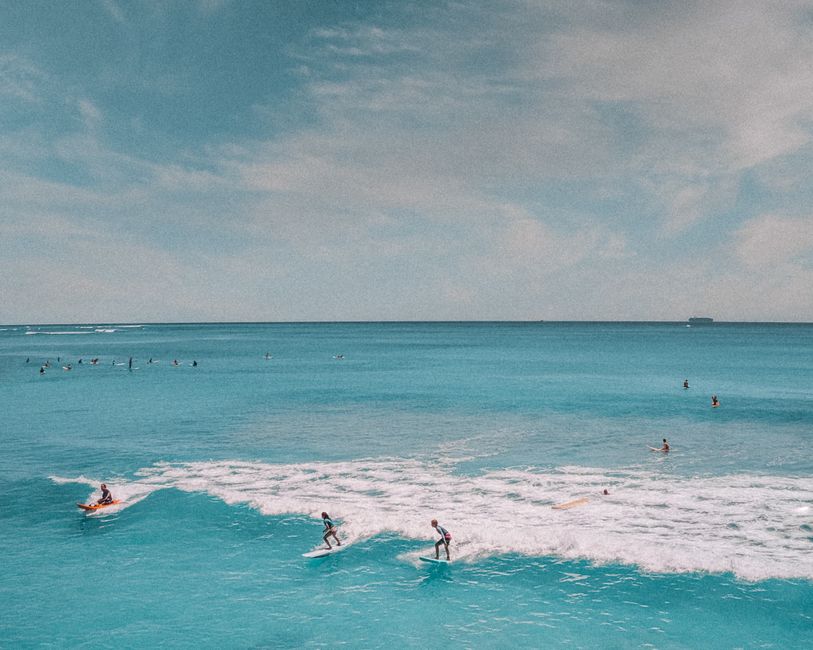
If you are planning a trip to the islands and need a reliable surfboard rental Oahu North Shore option, this guide breaks down everything you need to know. The North Shore is not just another stretch of coastline. It is the proving ground where winter swells march across the Pacific and unload on reefs that have shaped surfing history. Flying with a board is expensive, airlines treat surfboards like inconvenient luggage, and paying oversized baggage fees both ways can cost more than a week of rentals. This guide covers the shops that matter, what you will actually pay in 2026, how to match a board to your ability, and the logistics that most visitors overlook until they are standing in a packed parking lot with a 9-foot longboard and no straps.
Table of Contents
- Why Rent a Board on the North Shore vs. Waikiki?
- Top Surfboard Rental Shops on the North Shore (2026 Guide)
- Surfboard Rental Prices on the North Shore (2026 Comparison)
- How to Choose the Right Board for North Shore Conditions
- Essential Logistics: Getting Your Board to the Beach
- What to Know About Rental Policies (Insurance, Deposits, and Damage)
- Frequently Asked Questions About North Shore Surfboard Rentals
Why Rent a Board on the North Shore vs. Waikiki?
The difference between renting on the North Shore and renting in Waikiki comes down to the waves themselves. Waikiki offers gentle, rolling swells that break over sand and reef in waist-deep water, making it one of the best places on earth to take a first lesson. The North Shore is a different animal entirely. From November through February, spots like Pipeline, Sunset Beach, and Waimea Bay produce waves that range from 15 to 30 feet, moving with power that demands experience, fitness, and local knowledge.
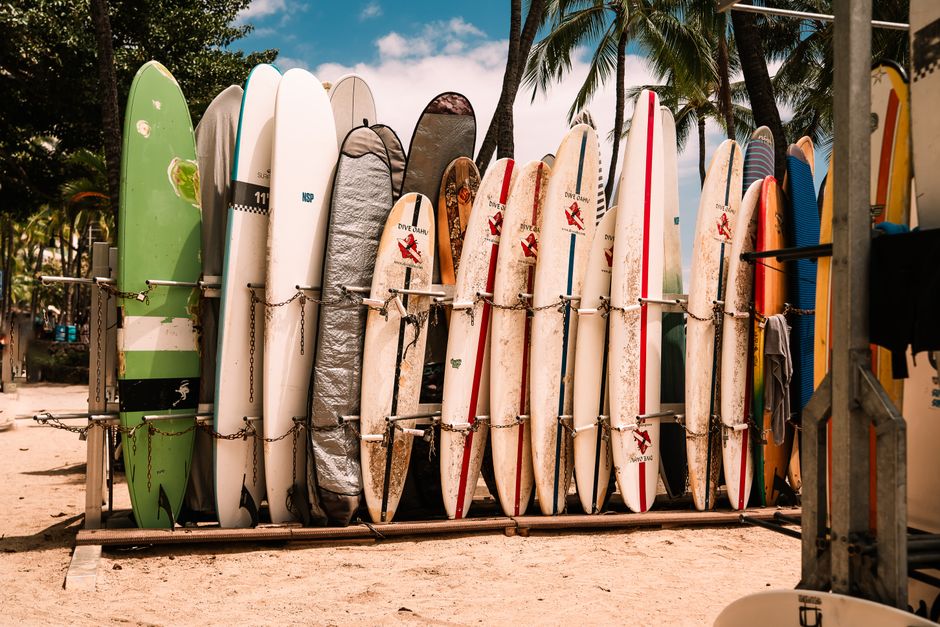
Rental shop inventory reflects this divide. Walk into a Waikiki surf stand and you will find racks of soft-top boards, almost exclusively. North Shore shops stock step-up guns for heavy days, performance shortboards, and glassed longboards built to handle steep, fast drops. If you are an intermediate or advanced surfer, renting on the North Shore puts the right equipment under your feet without requiring you to haul boards through Honolulu traffic.
There is also a practical argument. Driving from Waikiki to the North Shore with a board strapped to a rental car can take 90 minutes each way, longer if the H-2 backs up through Mililani. Renting locally in Haleiwa eliminates the commute and puts you closer to the breaks when the swell direction shifts overnight. You also get something harder to quantify: local intel. The person behind the counter at a Haleiwa surf shop knows which break is working on a given wind and tide. That knowledge is worth more than saving a few dollars on a Waikiki rental.
Top Surfboard Rental Shops on the North Shore (2026 Guide)
Not every rental shop on the North Shore serves the same customer. Some cater to traveling experts who know exactly what they want. Others specialize in getting beginners into whitewater safely. The following shops represent the best options depending on your skill level, budget, and how much convenience you need.
Surf Hawaii 4U – Best for Experienced Surfers
Surf Hawaii 4U operates with a clear philosophy: they rent boards to surfers who can handle North Shore conditions, and they do not apologize for turning people away. The shop lists shortboards and longboards at $30 per day, with surf straps available for an additional $10. Leashes are included with every rental. What sets this operation apart is the surf coach on staff who makes the final call on whether conditions and your stated experience level match up. If the swell is pumping and you cannot confidently describe your comfort zone, expect an honest conversation rather than a transaction.
This is not a shop for first-timers. There are no soft-tops in the rack and no bundled lesson packages. The boards are meant for surfers who already know how to read a lineup, position for a peak, and handle a hold-down. If that describes you, the pricing is straightforward and the equipment is appropriate for the zone.
Go Nuts Hawaii – Best for Beginners and Families
Go Nuts Hawaii sits at 58-106 Kaunala Street and positions itself as the entry point for visitors who want to experience North Shore surfing without getting in over their heads. The shop emphasizes what they call a gentle introduction, with soft-top beginner boards, group lessons, and dedicated surf camps for kids and adults. Multi-activity packages bundle rentals with instruction, which makes sense for families where different members have different comfort levels in the ocean.
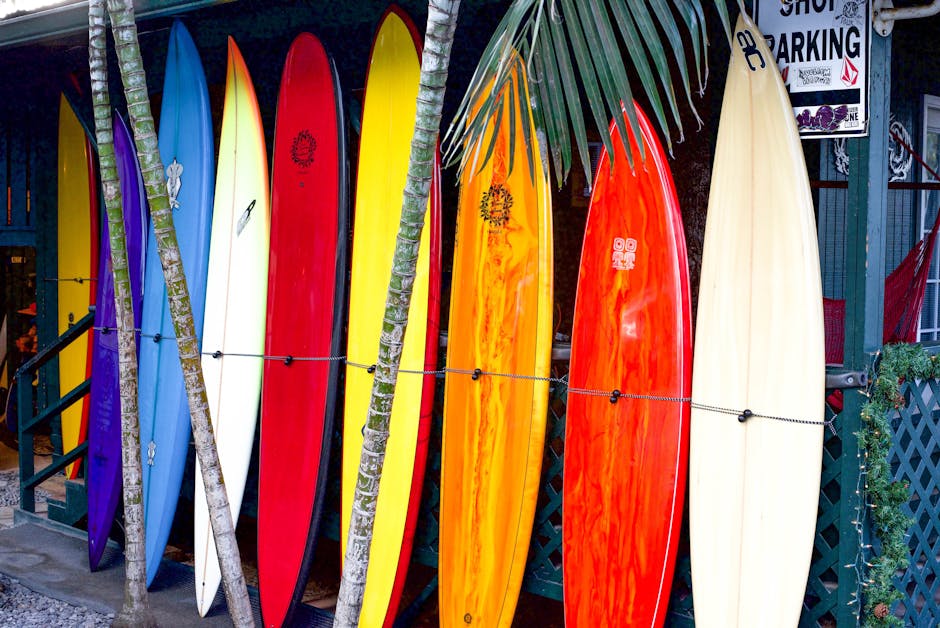
The beginner focus does not mean the shop lacks equipment for better surfers, but the real value here is the structured learning environment. If you have never paddled out before, or if you tried once in Waikiki and want to step up to a real reef break under supervision, this is the most logical starting point on the North Shore. The surf camp offering is unique among the shops covered here and worth investigating if you plan to stay for a week or more.
Surf N Sea – Best for Multi-Activity and Unique Experiences
Surf N Sea bills itself as Oahu's oldest surf and dive shop, operating out of 62-595 Kamehameha Highway in Haleiwa. The rental inventory spans surfboards, stand-up paddleboards, snorkel gear, and kayaks. What makes this shop unusual is the pairing of surf rentals with shark cage tours, an offering that lets visitors surf in the morning and swim with Galapagos and sandbar sharks in the afternoon.
The retail side of the business is equally eclectic. The shop cross-promotes Haleiwa Ukuleles, handmade instruments built on the North Shore, creating a browsing experience that goes well beyond surf hardware. For groups where one person wants to surf, another wants to snorkel, and a third just wants to wander through a historic shop, Surf N Sea covers all of those bases under one roof.
Haleiwa Surf Shop – Best for Vintage and Hand-Shaped Boards
Haleiwa Surf Shop, located at 66-214 Haleiwa Road, occupies a distinct niche. While most rental shops stock durable, mass-produced boards designed to survive the rental cycle, this shop offers authentic, hand-shaped vintage surfboards sourced directly from the North Shore. These are not replicas. They are boards with history, shaped by local craftsmen, and they appeal to surfers who appreciate the art and lineage of the sport.
The shop also provides crating and shipping services. If you fall in love with a board during your stay, they will package it and send it home. A kama'aina discount is available in-store for Hawaii residents, though the shop does not publish the percentage online. If you hold a Hawaii ID, ask at the counter. For visitors who want to ride something with soul rather than a generic rental board, this is the stop.
Hawaii Surfboard Rentals – Best for Islandwide Delivery
Hawaii Surfboard Rentals has been operating since 2005 and solves the single biggest logistical headache for visiting surfers: getting a board from a shop to your accommodation and back again. The company offers free islandwide delivery and pickup, covering the North Shore and East Oahu. This model works especially well for visitors staying in vacation rentals, Airbnbs, or homes where driving to Haleiwa to collect a board would eat into surf time.
The delivery window typically operates on a 24-hour cycle, so you can arrange to have boards dropped off the evening before an early morning session. If convenience is your top priority and you would rather spend your trip surfing than running errands, this is the service to book.
Surfboard Rental Prices on the North Shore (2026 Comparison)
Price transparency varies across North Shore rental shops. Some list rates clearly online. Others require a phone call or an in-person visit. Based on available data and current market patterns in 2026, here is what you can expect to pay.
A standard longboard or shortboard rents for roughly $30 to $40 per day at most shops. Soft-top beginner boards run slightly less, typically $25 to $35 per day. Premium boards, including hand-shaped vintage models from shops like Haleiwa Surf Shop, start around $50 per day and climb from there depending on the specific board.
Additional costs catch some visitors off guard. Surf straps, which are essential if you plan to transport a board on a rental car without a roof rack, add about $10 per day. Damage waivers, where offered, run $5 to $10 per day and cap your financial liability if the board gets dinged or snapped. Not every shop advertises these fees upfront, so ask before you hand over a credit card.
Weekly and multi-day discounts are the biggest gap in publicly available pricing information. Most North Shore shops do not list long-term rates on their websites. The best approach is to call or visit in person and ask. If you are staying two weeks or longer, the buy-versus-rent calculation shifts. A Reddit thread that surfaced in search results suggests purchasing a used board from Surfboard Factory Hawaii and packing it home in a day bag as a cheaper alternative to extended rentals. The math works if you surf most days and can sell the board before departing or accept the airline baggage fee on the return flight.
How to Choose the Right Board for North Shore Conditions
Board selection on the North Shore is not a one-size-fits-all decision. The break you plan to surf, the season, and your ability level all dictate what belongs under your feet. Getting this wrong ranges from frustrating to genuinely dangerous.
Beginners: Stick to the Summer or Specific Spots
Winter on the North Shore is not beginner territory. From November through February, the same swells that produce world-class barrels at Pipeline create conditions that can injure or kill inexperienced surfers. If you are visiting during these months and still want to paddle out, your options narrow considerably. Malaeakahana Beach Park on the North Shore's eastern edge offers more protected conditions. Chuns Reef can work on smaller days. In both cases, rent a soft-top longboard in the 8-foot to 9-foot range and consider booking a lesson through Go Nuts Hawaii or Active Oahu Tours, which delivers beginner boards directly to safer spots.
Summer changes the equation. From May through September, the North Shore goes flat or produces small, manageable waves suitable for learning. Haleiwa Beach Park becomes a viable option. The same soft-top longboard that would be useless at Pipeline in January becomes the right tool for waist-high peelers in July.
Intermediate to Advanced: Match the Board to the Break
Experienced surfers need to think in terms of specific breaks rather than general regions. Pipeline and Sunset Beach demand a step-up gun, typically in the 6-foot-6 to 7-foot range, with enough volume to paddle into waves that move fast and throw thick. Waimea Bay is an expert-only wave with no margin for error. Shops like Surf Hawaii 4U will assess your experience before renting a board suitable for Waimea, and they will refuse the rental if they have doubts.
Haleiwa and Laniakea offer more forgiving options on moderate days. A longboard or funboard in the 8-foot to 9-foot range works well at these breaks when the swell is manageable. One insider tip worth knowing: the staff at North Shore Surf Shop, located near Shark's Cove, have a reputation for steering goofy-footers toward right-hand breaks. If you surf with your right foot forward, ask for local knowledge on which spots will give you a frontside wave.
Essential Logistics: Getting Your Board to the Beach
Securing a rental board is step one. Getting it to the water without damaging the board, your car, or your schedule is the part most visitors overlook.
North Shore parking lots fill early. In winter, when the swell is running, lots at Pipeline, Sunset, and Waimea reach capacity by 8:00 AM. Plan to arrive before sunrise if you want a spot within walking distance of the break. If you are renting a car, confirm that the rental agency allows surfboard transport and that the vehicle has a roof rack or that you have rented surf straps. Soft rack pads are a worthwhile investment if the shop sells or rents them.
Proximity matters when choosing a rental shop. Surf N Sea sits closest to Haleiwa Beach Park. Go Nuts Hawaii is near Kawailoa Beach. If you already know which break you plan to surf, pick a shop that minimizes the drive with a board on the roof.
Delivery services eliminate the transportation problem entirely. Hawaii Surfboard Rentals drops boards at your accommodation and picks them up when you are done. Schedule delivery for the evening before your first session to avoid wasting daylight on logistics. If you rent a longboard, ask whether the shop provides a board bag. Even a basic sock protects the board from sun and minor dings during transport.
What to Know About Rental Policies (Insurance, Deposits, and Damage)
Rental policies on the North Shore vary by shop, but certain practices are common enough to expect. Most shops place a credit card hold ranging from $100 to $500, depending on the value of the board you rent. This hold is released when you return the board undamaged, but it can take several business days to clear, so plan your available credit accordingly.
Damage waivers are not universal, but they are worth asking about. For an additional $5 to $10 per day, some shops cap your liability at a fixed amount if the board gets dinged, creased, or snapped. Without a waiver, you may be on the hook for the full retail replacement cost. A broken board at a North Shore reef break is not a hypothetical scenario. Waves with power can snap a board in seconds, and arguing about liability while standing in a shop with a two-piece longboard is a situation best avoided.
Kama'aina discounts exist but are rarely advertised. Haleiwa Surf Shop confirms a discount for Hawaii residents in-store. Other shops may offer similar breaks. If you have a Hawaii ID, ask at every shop. The worst they can say is no.
Frequently Asked Questions About North Shore Surfboard Rentals
How much does it cost to rent a surfboard on Oahu's North Shore?
Expect to pay between $25 and $50 per day depending on board type and shop. Soft-top beginner boards sit at the low end. Performance shortboards and longboards run around $30 to $40. Premium hand-shaped boards start at $50 and go up.
Do I need to book surfboard rentals in advance?
During winter swell season, from November through February, booking ahead is strongly recommended. Shops sell out of the most popular board sizes, especially step-ups and guns. In summer, walk-in availability is generally fine, though calling ahead never hurts.
What size surfboard should I rent as a beginner?
Beginners should rent a soft-top longboard in the 8-foot to 9-foot range. The extra volume provides stability and makes paddling into small waves easier. Avoid shortboards until you can consistently catch waves and control your line on a longboard.
Are there surfboard delivery services on Oahu?
Yes. Hawaii Surfboard Rentals offers free islandwide delivery and pickup, covering the North Shore and East Oahu. Active Oahu Tours also delivers beginner boards to safer North Shore spots.
What is the difference between renting in Waikiki versus the North Shore?
Waikiki rentals cater almost exclusively to beginners, with soft-top boards and gentle waves suitable for first lessons. North Shore rentals stock performance equipment for intermediate and advanced surfers, and the waves reflect that difference. If you are not comfortable in overhead surf, rent in Waikiki or stick to summer months on the North Shore.
Ready to hit the waves? Book your rental in advance to secure the best board for your skill level, and always check conditions before paddling out. The North Shore rewards preparation and punishes overconfidence. Choose the right board, respect the ocean, and you will understand why this stretch of coastline has shaped surfing for generations.
