Planning a trip to Maui in 2026 means navigating a landscape of state parks that has shifted dramatically in the past few years. Outdated travel guides and social media posts will not warn you about the extended closure of a beloved valley monument or the non-negotiable reservation system at the island’s most famous black sand beach. This guide covers all eight official Maui State Parks managed by the Hawaii Department of Land and Natural Resources (DLNR), from the coastal lava tubes of Waiʻānapanapa to the misty redwood groves of Polipoli. We also clarify the common confusion between state parks, Haleakalā National Park, and county beach parks, so you can plan every day on the island without showing up to a locked gate or a sold-out entry window.
Table of Contents
- Why Visit Maui State Parks? (National Park vs. State Park Distinction)
- Complete List of Maui State Parks (Official DLNR Guide)
- #1 Must-Visit: Waiʻānapanapa State Park (Black Sand Beach)
- ʻĪao Valley State Monument (Closed Until July 2026 – What You Need to Know)
- Mākena State Park (Big Beach and Beyond)
- Hidden Gems: The Waysides and Upcountry Parks
- Maui State Parks Camping Guide (2026 Update)
- Essential 2026 Travel Tips for Maui State Parks
- Frequently Asked Questions About Maui State Parks
- Plan Your Maui State Parks Road Trip (Suggested Itinerary)
Why Visit Maui State Parks? (National Park vs. State Park Distinction)
A frequent point of confusion for first-time visitors is the difference between Haleakalā National Park and the eight Maui State Parks. Haleakalā is a federal site managed by the National Park Service. It requires its own entry fee and a separate sunrise reservation system. The state parks, by contrast, fall under the DLNR Division of State Parks and offer a completely different slice of the island. You will not find volcanic craters here, but you will find a black sand beach framed by lava tubes, a 1,200-foot needle of rock rising from a lush valley floor, and a highland forest planted with redwoods nearly a century ago.

State parks on Maui also tend to be less crowded than the national park, though the reservation system at Waiʻānapanapa has changed the dynamic for that particular site. The value lies in the cultural and ecological range. You can stand inside a lava cave that once served as a fishing shrine, walk an ancient Hawaiian coastal trail, or picnic at a waterfall wayside with no entry fee at all. For 2026 travelers, the landscape is defined by two critical updates: ʻĪao Valley State Monument remains closed until mid-July for safety improvements, and Waiʻānapanapa’s reservation system is now a permanent fixture, not a temporary pandemic measure.
Complete List of Maui State Parks (Official DLNR Guide)
The DLNR officially lists eight state parks, monuments, and waysides on Maui. They cluster naturally into three geographic groups, which makes route planning straightforward whether you are driving the Road to Hana, exploring central Maui, or heading upcountry.
East Maui and The Road to Hana
Four of the eight parks sit along or just off the Hana Highway, making them essential stops on the classic east-side drive.
Waiʻānapanapa State Park is the crown jewel of this group, home to the famous Pailoa black sand beach, sea arches, blowholes, and the Ke Ala Loa O Maui coastal trail. Puaʻa Kaʻa State Wayside offers a compact waterfall and swimming hole tucked into the rainforest, with picnic tables shaded by monkeypod trees. Kaumahina State Wayside provides a sweeping overlook of the Keʻanae Peninsula, a perfect spot to stretch your legs and eat lunch. Wailua Valley State Wayside sits further along the highway, where a short stair climb reveals a panoramic view of the valley, taro fields, and the distant coastline.

Central and West Maui
Two parks anchor the central region, though one is inaccessible for the first half of 2026.
ʻĪao Valley State Monument is the site of the iconic ʻĪao Needle, a 1,200-foot basalt pinnacle rising from the valley floor. The park features a paved walking path and an ethnobotanical loop showcasing native Hawaiian plants. However, the DLNR has closed the monument for slope stabilization and safety improvements, with a target reopening date of July 17, 2026. Halekiʻi-Pihana Heiau State Monument sits on the outskirts of Wailuku and preserves two ancient Hawaiian temple platforms. It is free, rarely crowded, and offers a quiet cultural counterpoint to the busier coastal parks.
South and Upcountry Maui
The final two parks could not be more different in character.
Mākena State Park spans 165 acres along the south shore and includes three distinct beaches: Big Beach (Oneloa), Puu Olai, and the adjacent Onelui. It is a sun-drenched expanse of golden sand popular with bodysurfers and shore fishermen. Polipoli Spring State Recreation Area sits at roughly 6,200 feet elevation on the slopes of Haleakalā, enveloped in a cool, often foggy forest of redwood, cedar, and cypress. Note that Polipoli’s cabins and camping areas are closed indefinitely as of 2026, limiting visits to day use only.
#1 Must-Visit: Waiʻānapanapa State Park (Black Sand Beach)
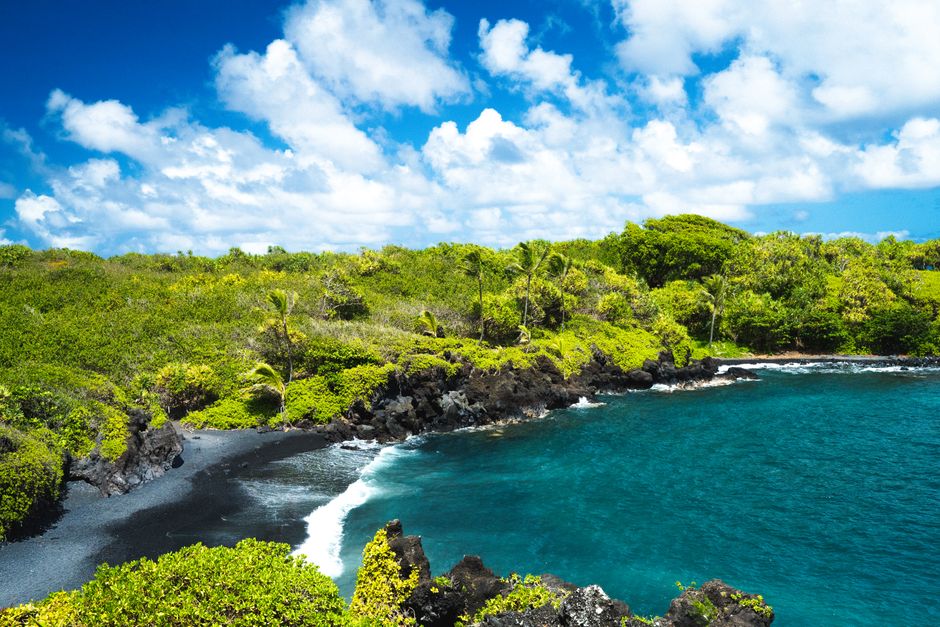
Waiʻānapanapa is the park that dominates every Maui itinerary, and for good reason. The jet-black pebbles of Pailoa Beach, the turquoise water, and the dark lava formations create a scene that feels prehistoric. The park sits at the end of a short road off the Hana Highway near mile marker 32, and the 2026 reality is that you cannot simply pull up and walk in.
How to Get Reservations for 2026
Every visitor, whether a non-resident or a Hawaii resident, must book an entry reservation in advance through the state’s online portal at gostateparks.hawaii.gov. The fee for non-residents is $5 per person plus $10 per non-commercial vehicle. Commercial vehicles pay a tiered rate based on passenger capacity: $25 for 1 to 7 passengers, $50 for 8 to 25 passengers, and $90 for 26 or more. The park is open daily from 7:00 AM to 6:00 PM, and reservations are released in 30-day rolling windows. During peak season, which runs December through March, weekend and early-morning slots often sell out within hours of becoming available. Book the earliest time slot you can get, ideally the 7:00 AM entry, to secure parking and experience the beach before the tour vans arrive.
Top Activities and Trails
Pailoa Black Sand Beach is the main draw, but swimming here is not recommended. The currents are strong, the shore break is unpredictable, and there are no lifeguards. Wading in the shallows is fine, but keep a close eye on children and never turn your back on the waves. The real adventure lies in the Ke Ala Loa O Maui, also called the Piilani Trail, a coastal path that traces an ancient Hawaiian route along the sea cliffs. The trail passes sea arches, blowholes, and lava tubes that once served as fishing shrines. Bring a flashlight to explore the caves safely, and wear sturdy shoes: the lava rock is sharp and uneven.
Camping and Cabins at Waiʻānapanapa
With Polipoli’s facilities closed indefinitely, Waiʻānapanapa is the only state park on Maui offering reliable overnight accommodations in 2026. Tent campsites cost $30 per night and require a permit booked through camping.ehawaii.gov. The cabins, which rent for $100 per night, are basic structures with beds and electricity but no air conditioning. They book up even faster than the campsites, so plan your dates well ahead. Both options put you inside the park after the day-use crowds leave, which is the best way to experience the black sand beach in solitude.
ʻĪao Valley State Monument (Closed Until July 2026 – What You Need to Know)
ʻĪao Valley is one of Maui’s most photographed landmarks, but it will be off-limits for the first half of the year. If you are traveling before mid-July, you need to adjust your plans.
The 2026 Closure Details
The DLNR announced the closure to address slope stabilization and safety improvements along the paved trail and viewing platform that leads to the ʻĪao Needle. The official reopening date, per the June 22 update, is July 17, 2026. When the monument does reopen, reservations will once again be required for entry, just as they were before the closure. Check the DLNR website for updates as your travel dates approach, because construction timelines can shift.
What You Are Missing (and Alternatives)
The ʻĪao Needle itself is a 1,200-foot basalt spire that served as a natural altar and lookout in ancient times. The paved path makes it accessible for strollers and visitors with limited mobility, and the ethnobotanical loop introduces native plants like kalo (taro) and ʻawa (kava). While you wait for the monument to reopen, two nearby alternatives fill the gap. Kepaniwai Park and Heritage Gardens, a county park located just below ʻĪao Valley, is free and features picnic pavilions, a stream, and gardens representing the cultures that shaped Hawaii’s plantation era. For a cultural experience without any crowds, drive ten minutes to Halekiʻi-Pihana Heiau State Monument in Wailuku. The two temple platforms offer a quiet, powerful connection to Maui’s pre-contact history.
Mākena State Park (Big Beach and Beyond)
Mākena State Park occupies 165 acres of South Maui coastline and delivers the classic golden-sand beach day that many visitors picture when they imagine Hawaii. It is first-come, first-served, with no reservation system, which makes it a flexible addition to any itinerary.
Three Beaches in One Park
Big Beach, known officially as Oneloa, stretches for nearly two-thirds of a mile and is wide enough to absorb large crowds without feeling packed. The shore break here is famously powerful, making it a favorite for experienced bodysurfers and a hazard for the unprepared. Puu Olai, the cinder cone that rises at the north end of the beach, offers a short but steep hike to panoramic views of the south coast, including the crescent of Molokini in the distance. On the other side of Puu Olai lies Little Beach, or Onelui, a small cove known for its clothing-optional culture. It is not officially part of the state park, but the footpath over the rocks from Big Beach is well worn.
Safety and Surf Conditions
Winter swells, which run from November through March, can turn Big Beach into a dangerous shore break with waves that slam swimmers into the sand. Spinal injuries are not uncommon. There are no lifeguards on duty at Mākena, so assess the conditions before entering the water. The safest window for swimming and bodysurfing is early morning during the summer months, June through August, when the surf is typically calmer. If the waves look bigger than you expected, they are, and the best move is to stay on the sand.
Hidden Gems: The Waysides and Upcountry Parks
Beyond the marquee destinations, Maui’s state parks include a highland forest that feels like the Pacific Northwest and three roadside waysides that cost nothing to enter.
Polipoli Spring State Recreation Area (The Highland Escape)
Polipoli sits at roughly 6,200 feet on the western slope of Haleakalā, and the climate here is a shock to anyone who has spent the morning on a Maui beach. The air is cool and damp, often shrouded in mist, and the forest is a surreal mix of redwood, sugi pine, and cypress planted during a reforestation project in the 1930s. The Redwood Trail and Plum Trail wind through the groves, offering a quiet, meditative hike that feels worlds away from the coast. On clear days, the views stretch across the ʻAlenuihāhā Channel to the island of Hawaiʻi, with Lānaʻi and Molokaʻi visible to the west. The cabins and camping areas remain closed indefinitely as of 2026, so plan Polipoli as a day-use stop only. Morning fog often burns off by 10:00 AM, making midday the best window for visibility.
Road to Hana Waysides (Puaʻa Kaʻa, Kaumahina, Wailua Valley)
The three waysides along the Hana Highway are easy to overlook in the rush to reach Waiʻānapanapa, but they reward travelers who slow down. Puaʻa Kaʻa State Wayside features a small waterfall that cascades into a swimming hole, with picnic tables set among the trees. The rocks around the pool are slick with algae, so step carefully and avoid climbing near the falls. Kaumahina State Wayside delivers the best unobstructed view of the Keʻanae Peninsula, a patchwork of taro fields jutting into the Pacific. It is an ideal lunch stop, with restrooms and shaded tables. Wailua Valley State Wayside requires a short climb up a set of stairs to a lookout platform. The view encompasses the Wailua Valley, the coastline, and, on clear days, the summit of Haleakalā in the distance. All three waysides are free and require no reservation.
Maui State Parks Camping Guide (2026 Update)
Camping on Maui has become more complicated with the indefinite closure of Polipoli’s facilities. Here is exactly what is available and how to book it.
Where Can You Actually Camp?
Waiʻānapanapa State Park is the only state park on Maui with operational camping and cabins in 2026. The tent sites are set in a grassy area near the coast, with restrooms and cold showers nearby. The cabins are simple A-frame structures with beds, a small kitchen area, and electricity, but no air conditioning or linens. Polipoli Spring State Recreation Area is closed for camping and cabins until further notice, and no timeline has been announced for its reopening. ʻĪao Valley State Monument does not permit camping at all, and the waysides are day-use only.
Reservation Process and Permits
All camping at Waiʻānapanapa requires a permit obtained through the DLNR camping portal at camping.ehawaii.gov. Non-resident tent sites cost $30 per night, and cabins cost $100 per night. Permits become available 30 days in advance, and weekend dates fill within hours of release. Book as close to the 30-day window opening as possible, and have a backup date in mind if your first choice is unavailable. Print your permit or save a digital copy with a charged phone, because cell service is spotty on the Hana Highway and you will need to show proof of reservation at the park entrance.
Essential 2026 Travel Tips for Maui State Parks
A few practical details will save you from the most common mistakes visitors make when exploring Maui’s state parks.
Reservation Requirements (Do Not Show Up Without One)
Waiʻānapanapa State Park and ʻĪao Valley State Monument, once it reopens on July 17, require advance reservations for every visitor. Book through gostateparks.hawaii.gov and have your confirmation ready on your phone or printed out. Mākena State Park, the three Hana Highway waysides, Halekiʻi-Pihana Heiau, and Polipoli (for day use) do not require reservations and operate on a first-come, first-served basis.
Safety and Hazards (What the Guides Do Not Tell You)
Black sand beaches like Pailoa at Waiʻānapanapa have strong rip currents and sudden drop-offs. Swimming is not recommended, and wading should be done with caution. The trails at Puaʻa Kaʻa and ʻĪao Valley are perpetually wet and slick. Water shoes or hiking sandals with good tread will serve you better than flip-flops. Polipoli’s high elevation means thinner atmosphere and stronger UV exposure. Apply sunscreen even when the air feels cool and overcast, and carry more water than you think you need. Cell service is unreliable or nonexistent at most of these parks, so download offline maps and reservation confirmations before you leave your accommodation.
Pet Policy
Dogs and other pets are not permitted on state park trails, beaches, or in campgrounds. The only exception is for service animals as defined by the Americans with Disabilities Act. Emotional support animals do not qualify under Hawaii state park rules. Leave your pets at your hotel or vacation rental, and do not leave them in a parked car, where temperatures can become dangerous within minutes.
Best Time of Day to Visit
Waiʻānapanapa is at its quietest right at the 7:00 AM opening. The tour vans start arriving by mid-morning, and the small parking lot fills quickly. Mākena State Park is most pleasant in the late afternoon, around 3:00 PM, when the sun softens and the morning crowds thin out. Polipoli’s morning fog typically lifts by 10:00 AM, so midday offers the best visibility for the cross-channel views. The waysides are busiest between 10:00 AM and 2:00 PM as Road to Hana traffic peaks. An early start on the Hana Highway solves most crowding problems before they begin.
Frequently Asked Questions About Maui State Parks
Do I need a reservation for Maui state parks?
Yes for Waiʻānapanapa State Park and ʻĪao Valley State Monument (once it reopens). No for Mākena State Park, the three Hana Highway waysides, Halekiʻi-Pihana Heiau, and Polipoli Spring day use.
What is the difference between a state park and a county park on Maui?
State parks are managed by the DLNR and include sites like Waiʻānapanapa, ʻĪao Valley, and Mākena. County parks fall under Maui County and include popular beach parks like Kamaʻole Beaches in Kihei, Baldwin Beach near Paia, and Kepaniwai Park in ʻĪao Valley.
Is Haleakalā a state park?
No. Haleakalā is a National Park managed by the National Park Service. It requires a separate entry fee and a sunrise reservation booked through recreation.gov.
Can you swim at Waiʻānapanapa Black Sand Beach?
Swimming is not recommended due to strong currents and a steep drop-off. Wading in the shallows is allowed, but stay close to shore and watch for sudden wave surges.
Are there any free state parks on Maui?
Yes. The three Hana Highway waysides (Puaʻa Kaʻa, Kaumahina, Wailua Valley) and Halekiʻi-Pihana Heiau State Monument are all free to enter, with no reservation required.
Plan Your Maui State Parks Road Trip (Suggested Itinerary)
The Road to Hana Loop (Full Day)
Start with a 7:00 AM reservation at Waiʻānapanapa State Park. Spend the early morning exploring the black sand beach, lava caves, and the coastal trail before the crowds build. By mid-morning, head back west on the Hana Highway and stop at Puaʻa Kaʻa Wayside for a quick waterfall break. Continue to Kaumahina Wayside for a picnic lunch with the Keʻanae Peninsula spread out below you. In the afternoon, make a final stop at Wailua Valley Wayside for the short stair climb and the panoramic lookout. This route front-loads the main attraction and uses the waysides as decompression stops on the drive back.
South Maui Beach Day (Half Day)
Begin your morning at Mākena State Park. Claim a spot on Big Beach while the sand is still cool, then hike up Puu Olai for the coastal views before the midday heat sets in. Grab lunch from the food trucks that often park near the Mākena Surfing Beach lot. In the afternoon, drive 20 minutes north to Halekiʻi-Pihana Heiau State Monument in Wailuku. The temple platforms are quiet and shaded, offering a reflective end to a beach-centered day.
The 2026 reality for Maui State Parks is simple: reservations are non-negotiable for the top sites, and a few beloved spots remain temporarily out of reach. Book your Waiʻānapanapa entry the moment your 30-day window opens, check the DLNR website for ʻĪao Valley reopening updates, and do not overlook the free waysides and the quiet heiau that most visitors never find. The parks that are open reward the travelers who plan ahead.
