You have seen the photos. You have heard the stories. And now you are staring at a map of Hawaii, trying to figure out which of those four dots in the Pacific deserves your hard-earned vacation days. The question “which Hawaii island is best for first time visitor” is not just common: it is the single most important decision you will make when planning your trip. Get it right, and you will spend your days swimming under waterfalls, eating poke bowls that ruin mainland fish forever, and wondering why you waited so long. Get it wrong, and you might find yourself on a quiet hiking island when what you really wanted was nightlife and restaurant hopping. This guide exists to prevent that mismatch. We will walk through each island honestly, with no travel-brochure fluff, so you can match your travel style, budget, and trip length to the island that fits.
Table of Contents
- The Four Main Islands at a Glance
- Why Oahu Is the Top Recommendation for Most First-Timers
- Maui – The Romantic and Scenic Alternative
- Kauai – The Laid-Back Nature Lover’s Paradise
- The Big Island – For Volcanoes and Unique Adventures
- How to Choose: A Decision Framework for 2026
- Common First-Timer Mistakes to Avoid
- Frequently Asked Questions
- Final Verdict: Which Hawaii Island Is Best for a First-Time Visitor?
The Four Main Islands at a Glance
Hawaii has over 130 islands, but four dominate the conversation for tourism: Oahu, Maui, Kauai, and the Big Island (officially named Hawaii Island). Each one operates like a completely different destination that happens to share a state flag. There is no single “best” island, and anyone who tells you otherwise is really just telling you about their own vacation preferences. The right choice depends entirely on what you want from your trip.

For a quick-reference vibe check, think of it this way: Oahu is city energy meets surf culture, with Honolulu’s skyline on one side and legendary North Shore waves on the other. Maui is romance and luxury, the island where honeymooners watch sunrises from volcanic craters. Kauai is nature in its rawest form, a quiet, impossibly green place where roosters outnumber nightclubs. The Big Island is volcanoes and adventure, a landmass so large it contains eleven of the world’s thirteen climate zones. Oahu alone pulls in nearly 5 million visitors annually, making it the most popular starting point by a wide margin. But popularity does not always equal the best fit for you.
Why Oahu Is the Top Recommendation for Most First-Timers
The Perfect Mix of City and Nature
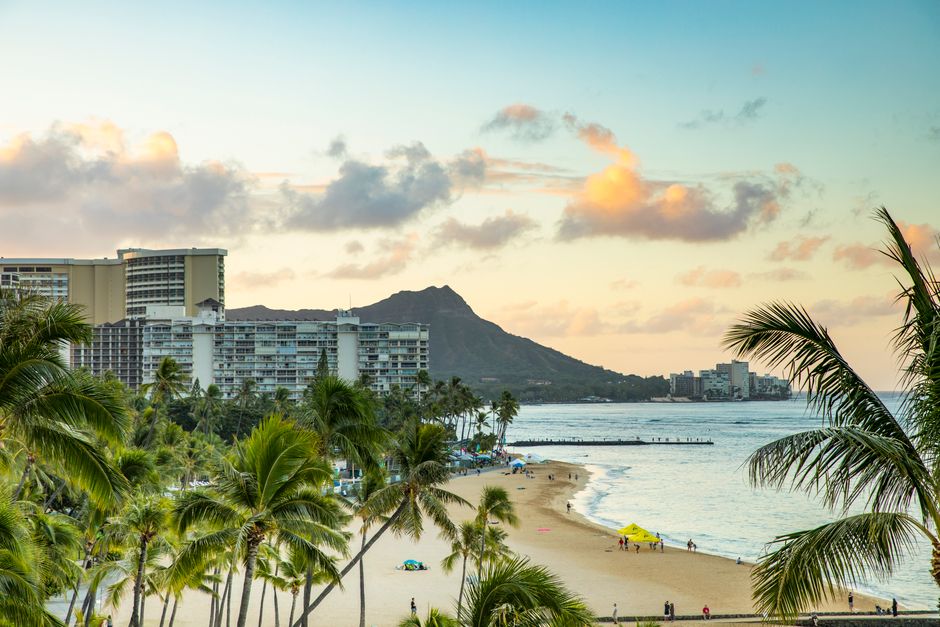
Oahu solves a problem that first-time visitors do not always know they have: the desire to experience Hawaii without sacrificing the conveniences that make travel easy. Waikiki Beach delivers the postcard scene, with Diamond Head crater looming in the background and surfboards stacked like firewood outside beachfront hotels. But walk inland a few blocks, and you will find a real city with a thriving food scene, museums, and the kind of energy that keeps evenings interesting.
For history, Pearl Harbor and the USS Arizona Memorial anchor a visit with gravity and context. Iolani Palace, the only royal palace on US soil, tells the story of the Hawaiian Kingdom before annexation. Then there is the North Shore, about an hour’s drive from Waikiki, where the pace slows and the beaches stretch wide. Lanikai and Kailua beaches on the windward side offer turquoise water and powder-fine sand that regularly appear on “best beaches in the world” lists. First-timers get what amounts to a sampler platter of Hawaii: a little city, a little history, a little country, and a lot of beach.
Beginner surfing is another quiet advantage. Waikiki’s gentle, rolling waves are famously forgiving, and the beach is lined with surf schools that can have a first-timer standing up within an hour. That experience alone, paddling out at sunset with Diamond Head silhouetted behind you, is worth the flight.
Ease of Navigation and Affordability
Oahu is the most accessible Hawaiian island in practical terms. Honolulu’s Daniel K. Inouye International Airport receives more direct flights from more US cities than any other island, which means more competition on routes and often lower fares. Flights from the US East Coast can still stretch to 18 hours with connections, but Oahu gives you the most options for getting there without a second layover.
Once you arrive, you can realistically skip the rental car for at least part of your stay. TheBus, Oahu’s public transit system, runs routes that connect Waikiki to Pearl Harbor, downtown Honolulu, and even the North Shore. Ride-share services are plentiful in the Honolulu metro area. That is a meaningful budget advantage when rental car prices in Hawaii routinely rank among the highest in the nation. Accommodation spans the full spectrum, from hostels and budget hotels in Waikiki to mid-range resorts and a few high-end properties. For first-timers watching their spending, Oahu simply stretches dollars further than the neighbor islands.
What Reddit and Experts Say
The internet has reached a rare consensus on this topic. Across travel forums, Reddit threads, and professional travel blogs, Oahu emerges as the most-recommended island for first-time visitors. One Reddit user summed it up bluntly: Oahu is “the best way to get an overall sense of HI for first timers.” The reasoning is consistent. Oahu packs the highest density of activities per square mile, which means less time in the car and more time actually doing things. For a traveler who may only have five to seven days, that efficiency matters.
The caveat is straightforward. Oahu is the most crowded island, and Waikiki in particular can feel like a tropical Manhattan at peak times. If your vision of Hawaii involves empty beaches and total solitude, Oahu will require some strategic planning to find those pockets of quiet. They exist, but you have to work a little harder for them.
Maui – The Romantic and Scenic Alternative
If Oahu is the all-rounder, Maui is the specialist. It is the island that honeymooners dream about, and for good reason. The scenery is dramatic in a way that feels curated: the Road to Hana winds through rainforest and past waterfalls on a drive that demands a full day and a patient driver. Haleakala National Park delivers a sunrise above the clouds that requires a 3 a.m. wake-up call and a reservation, but the payoff is an otherworldly view from the summit of a dormant volcano.
Maui’s beaches are exceptional. Kaanapali Beach offers a long stretch of golden sand backed by resorts, while Wailea to the south skews more upscale and quieter. Snorkeling at Molokini Crater, a partially submerged volcanic caldera, puts visitors face-to-face with reef fish in water so clear it feels like swimming in an aquarium. From December through May, humpback whales migrate to the warm waters between Maui and Lanai, and whale-watching tours depart daily from Lahaina and Maalaea harbors.
The trade-off is cost. Maui is notably more expensive than Oahu for hotels, dining, and activities. Resort fees are common, and even casual meals run higher than on Oahu. For first-timers, Maui fits best when the priority is a classic, romantic Hawaii experience and the budget can absorb the premium. It is less suited for travelers who want nightlife or a wide range of dining options after dark: Maui rolls up its sidewalks early.
Kauai – The Laid-Back Nature Lover’s Paradise
Kauai is what happens when nature wins. Known as the Garden Isle, it is the oldest of the main Hawaiian islands, and time has carved it into something spectacular. The Na Pali Coast, with its cathedral-like sea cliffs and emerald valleys, is the defining image. You can see it by boat, by helicopter, or on foot via the Kalalau Trail, an eleven-mile trek that ranks among the most beautiful and demanding hikes in the United States.
Waimea Canyon, often called the Grand Canyon of the Pacific, stretches fourteen miles long and drops over 3,000 feet deep. Hanalei Bay on the north shore offers a crescent of beach framed by mountains and waterfalls that feels untouched by the modern world. The island is intentionally slow. There are no high-rise hotels, no major nightlife districts, and the main highway is a two-lane road that circles only part of the island.
For first-timers, Kauai works best for those who are comfortable with self-guided adventure and do not need a packed itinerary of organized activities. It rewards the kind of traveler who is happy spending an afternoon on a secluded beach with a book and a cooler. Rain is a reality, especially on the north shore, where lushness comes at the cost of frequent showers. Pack a rain jacket and do not let the weather dictate your mood.
The Big Island – For Volcanoes and Unique Adventures
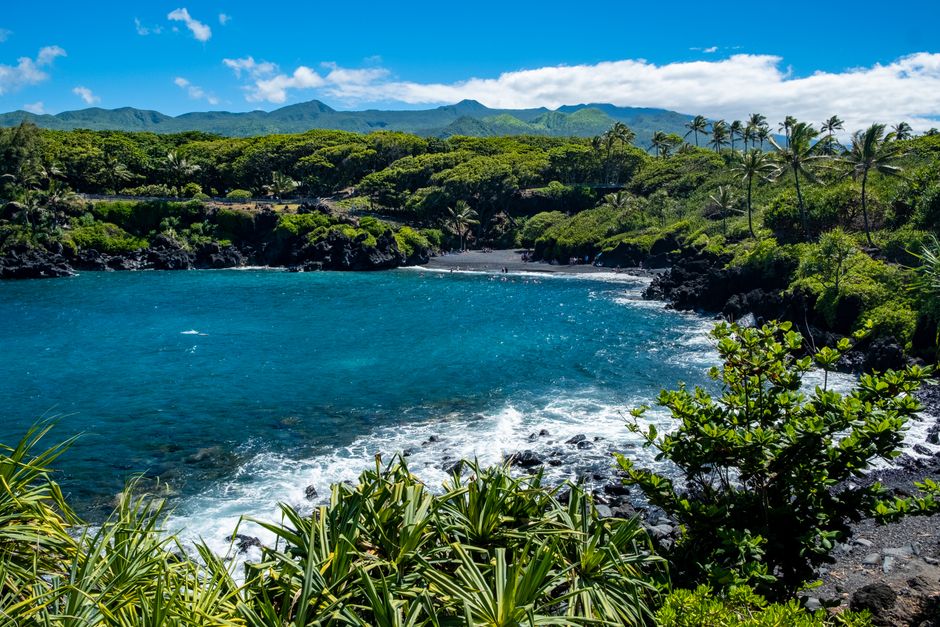
The Big Island is the outlier in every sense. It is physically massive, as large as all the other Hawaiian islands combined, and driving from Kona on the west coast to Hilo on the east coast takes roughly two hours without stops. That scale means the island contains an almost absurd range of environments: snow-capped peaks on Mauna Kea, tropical rainforest in Hilo, black sand beaches in Punaluu, and stark lava fields in Hawaii Volcanoes National Park.
The park is the headline attraction. It is the only place in Hawaii where you can see active volcanoes, and depending on volcanic activity, you may witness glowing lava flows or walk across recently cooled lava that still radiates heat. Night snorkeling with manta rays off the Kona coast is another experience unique to the Big Island. Boats shine lights into the water to attract plankton, which in turn attract mantas that glide and barrel-roll inches from snorkelers.
The Big Island suits adventurous first-timers who prioritize geological novelty over classic beach vacations. The beaches here are fewer and often rockier than on Maui or Oahu, though Hapuna Beach and a few others hold their own. A rental car is non-negotiable, and you should plan your days around drive times. The island rewards those who embrace the journey between stops as part of the experience.
How to Choose: A Decision Framework for 2026
Match Your Travel Style
The simplest way to decide is to name your travel personality. If you want city energy, variety, and a mix of history and nightlife, pick Oahu. If you are planning a romantic trip or honeymoon and care more about scenery and luxury than budget, pick Maui. If your ideal day involves hiking to a waterfall and eating a picnic on an empty beach with no cell service, pick Kauai. If volcanoes, manta rays, and the feeling of standing on geologically young earth excite you more than a resort pool, pick the Big Island.
Consider Your Budget
Oahu is the most affordable island overall, thanks to flight competition and a wide range of accommodation. Maui and Kauai sit in the mid-to-high range, with fewer budget options and higher average nightly rates. The Big Island can be budget-friendly if you base yourself in Kona and stick to self-catering and free natural attractions, but rental car costs add up. If you are considering island-hopping, inter-island flights on Hawaiian Airlines or Southwest typically run $50 to $150 one-way per person. That expense, plus the time lost to airport transfers, makes hopping practical only for longer trips.
Trip Length Matters
For a five-to-seven-day trip, stay on one island. Splitting that short a window between two islands means you will spend a disproportionate amount of time checking in, checking out, and sitting in airports. Oahu or Maui are the strongest single-island candidates for a weeklong stay. If you have ten days or more, a two-island split becomes viable. A common and satisfying combination is Oahu plus Maui: start with the city energy and history, then decamp to Maui for relaxation and scenery. Flights from the US East Coast can take up to eighteen hours door-to-door, so factor in a full day for jet lag recovery, especially if you are traveling with kids or older family members.
Common First-Timer Mistakes to Avoid
The most frequent mistake is overambition. Trying to visit all four islands in a single trip sounds adventurous in the planning stage but translates to spending more time in TSA lines than on beaches. Pick one or two and commit.
Skipping a rental car on the neighbor islands is another error. On Maui, Kauai, and the Big Island, a car is essential to reach almost anything worth seeing. Oahu is the exception, where you can reasonably rely on public transit and ride-shares for a Waikiki-focused stay.
Underestimating drive times catches many visitors off guard, especially on the Big Island. A Kona-to-Hilo day trip is doable but involves four hours of driving round-trip before you factor in stops. Plan accordingly and do not schedule back-to-back activities on opposite sides of the island.
Seasons matter more than first-timers often realize. Winter months, roughly December through March, bring larger surf to north-facing shores and more rain to windward areas. Summer is calmer and drier overall. The shoulder seasons, April through May and September through October, offer the best balance of good weather, manageable crowds, and reasonable prices.
Finally, cultural respect is not optional. Learn a few Hawaiian words: aloha (hello, goodbye, love) and mahalo (thank you) go a long way. Do not touch sea turtles or monk seals, both protected species. Support local businesses and farmers’ markets rather than defaulting to chains. The islands are not a theme park; they are a place where people live, and the aloha spirit is a real cultural value, not a marketing slogan.
Frequently Asked Questions
Is Maui or Oahu better for first-time visitors? This question comes up constantly, and the answer depends on your priorities. Choose Oahu for vibrant city life, history, cultural sites, beginner surfing, and more affordable travel options. Choose Maui for a laid-back, romantic getaway with scenic beauty, snorkeling, and outdoor exploration. There is no wrong answer, just the wrong fit for your travel style.
Which island is best for families with teens? Oahu offers the most variety and keeps teenagers engaged with surfing lessons, shopping, and urban exploration. The Big Island is a strong alternative for families interested in science and geology, with volcano tours and manta ray snorkeling providing genuinely educational experiences that do not feel like school.
Can I visit two islands in one trip? Yes, but only if you have ten or more days. Book inter-island flights in advance for the best rates, and plan for a half-day of travel between islands when you account for hotel checkout, airport transit, and the flight itself.
What is the cheapest Hawaiian island to visit? Oahu, due to higher flight competition, a wider range of budget accommodation, and the option to skip a rental car.
When is the best time to visit Hawaii in 2026? April through May and September through October offer the best combination of pleasant weather and lower crowds compared to summer and winter peaks.
Final Verdict: Which Hawaii Island Is Best for a First-Time Visitor?
For roughly 80 percent of first-time visitors, Oahu is the safest and most rewarding choice. It delivers the greatest variety, the easiest logistics, and the most forgiving price point. You will find the Hawaii of postcards alongside the Hawaii of real life, and you will leave with a genuine sense of the islands’ culture and history. For couples seeking romance and luxury, Maui is the answer. For hikers and solitude-seekers, Kauai awaits. For adventurers drawn to volcanoes and raw geology, the Big Island delivers. Use the decision framework above, be honest about your travel style, and book early: demand for Hawaii in 2026 shows no signs of cooling. Ready to plan? Start with our Oahu itinerary guide for a day-by-day breakdown of where to go and what to skip.
